If you’ve just opened your Sakura Dreamy Tour kit, you might feel exactly the way @SunnyCee described it:
“It felt like stepping into a whole new world! So many parts and mechanical elements, a bit overwhelming, but absolutely fascinating.”
(@SunnyCee, Part 4)

What truly helps crafters finish this journey successfully isn’t “luck”, it’s the rich, detailed knowledge shared within our community.
Every tip below comes directly from real forum discussions, and together they make this beautiful project approachable for builders at any level. 

Before You Start: Testing, Tools, and Power Setup
1. Test Everything First : This Step Is Not Optional
- @Wenbare repeatedly reminds builders that any kit with lights and sound must be tested before final assembly . Discovering a problem after everything is sealed inside the structure can be extremely frustrating.
 (@Wenbare, Beginner Tips).

- @SunnyCee experienced this firsthand. During her first test, she panicked because there was no sound, even though the speaker was plugged in.

Later, she realized this was expected behavior: the sound switch had not been installed yet. (@SunnyCee, First Test)
Video from @SunnyCee :
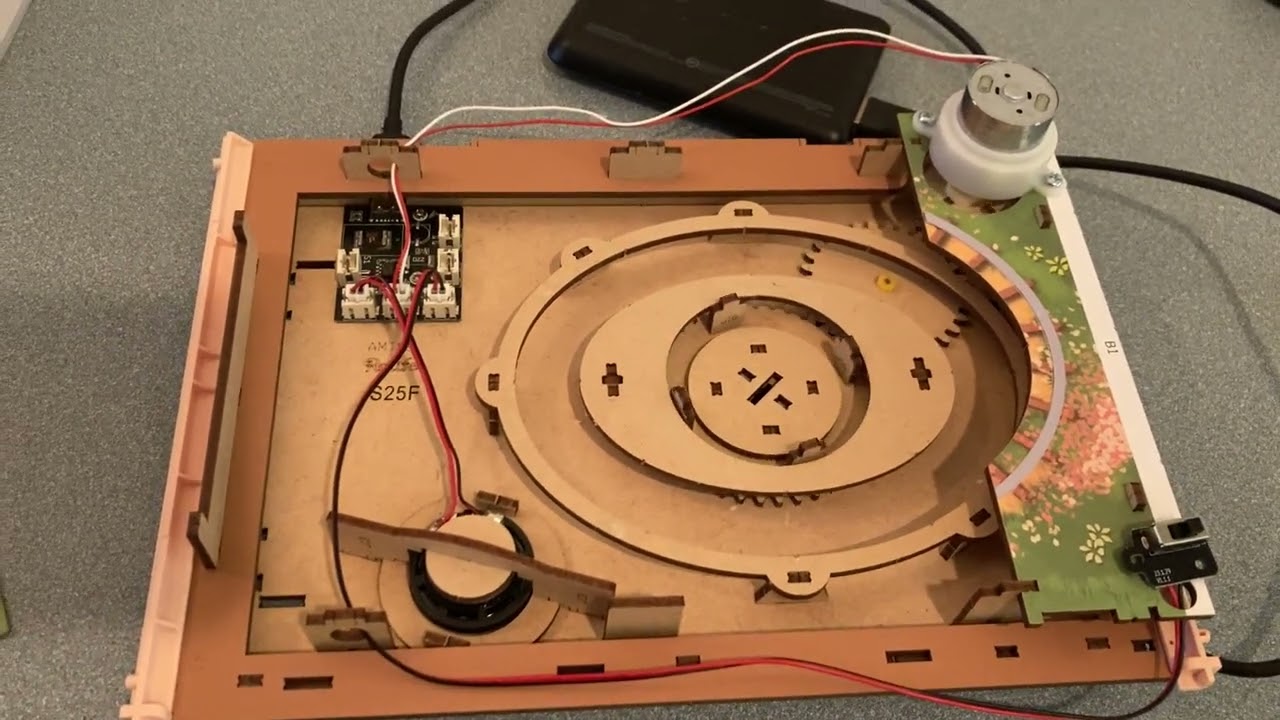
(It is mainly for checking motor and gear movement ) 
- Community consensus: The first test is not a full-function test
2. USB-C Cables and Power Sources
This kit requires an external USB-C cable and power supply. 
@Sunnycee and @Jerry recommends preparing multi-port adapters and spare batteries, making it easier to power multiple devices at once (@SunnyCee, Part 1).

3. Lightweight, Precise Tools Make a Big Difference
Simple tools can significantly reduce frustration: Craft knives  , Small sharp scissors
  , Sanding tools, A small amount of wax (@Wenbare & @Liset, Fragile Kit Tips)
@Liset adds a very practical technique:
-
“The smallest parts break the fastest. I use a special tool for removing small pieces.If the part has a hole, I insert the tool and gently wiggle it until it loosens.
-
The pointed end works for tiny parts, and the wide back helps with larger ones.”

@SunnyCee also noted:
- “This tool turned out to be way more important than I expected.”
(@SunnyCee, Part 1)

Assembly Tips: Slow Down and Build in Stages
1. The Survival Rules for Tiny Parts: Knife, Sanding, and Wax
This is @Wenbare’s most frequently repeated advice.
-
Why do small parts break so easily?
 Parts like the train roof, curved sections, petals, and bows are inherently fragile,
  it’s not because you’re using too much force.
@Wenbare even shared that she had to use a spare part because the original one couldn’t be repaired (@Wenbare, Fragile Kit Tips). -
@Wenbare’s recommended “three-piece toolkit”
 Sharp craft knife – never snap parts off by hand (@Wenbare / @Liset)
 Sanding tabs and joints – reduces insertion force significantly (@Jerry / @Nita_Davis)
 Wax – helps parts slide in smoothly and improves rotating components (@Jerry)

2. Super Glue, Used with Care and Intention
This is an often-overlooked but extremely valuable detail.
@Wenbare doesn’t use glue randomly, she has a method:
Use brush-on super glue : Apply only to the cracked area .
No overflow, no buildup. Leaves almost no visible marks on wood.
(@Wenbare, Fragile Kit Tips)

When @Jerry asked whether the brush would harden, @Wenbare clarified that she uses glue with a built-in brush , not a regular paintbrush. 
3. Train Jamming, Wobbling, or Hitting Scenery? You’re Not Alone
This is easily the most patience-testing stage of the build.
Common issues include :
 Petals or leaves catching on the train
 Side-to-side wobbling
 Extension arms snagging scenery
 Too low = scraping the ground; Too high = hitting trees
@SunnyCee documented her adjustment process in detail (@SunnyCee, Test 2):
Video from @SunnyCee :
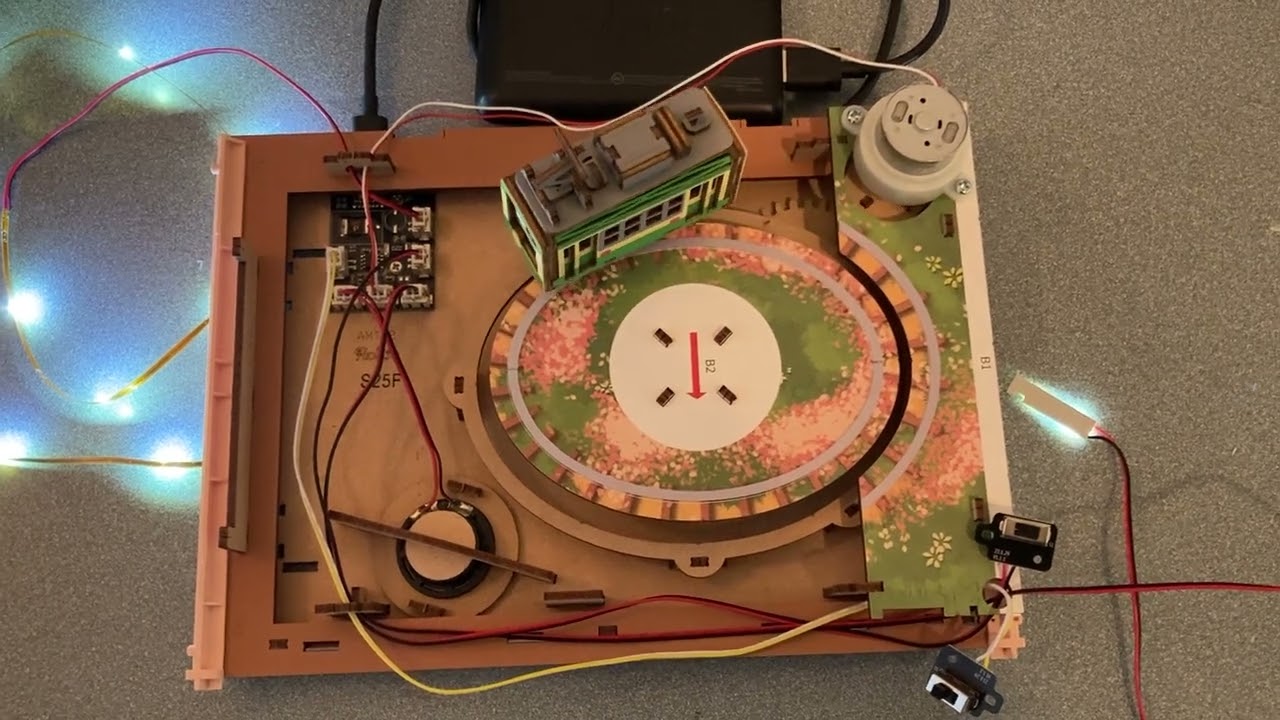
Her solutions included :
 Raising the rear edge to avoid petals
 Temporarily removing the top extension arm
 Adjusting tension, some areas looser, some tighter
 Testing repeatedly until motion became smooth
@Nectarines identified another cause :
 Petals placed too low
 The top piece also seems like it’s lose, she trimmed leaves and reinforced decorations with glue.
Community conclusion:
This model is not “assemble once and done.”
It’s built through testing, adjusting, and refining .
4. Lighting and Wiring: Not Hidden Completely, but Hidden Smartly
Below is the exact wiring logic @Terranoir123 described, in real build order .

① Aim LEDs at holes, not randomly
Align LEDs with structural openings to create a natural glow while hiding the light source itself (@Terranoir123, LED Pathway).

→ First layer of concealment: hide the light, not the wire
② Always route wires along the back
-
Terranoir’s rule:
Wires only run along backboards, behind trees, or on rear-facing surfaces. -
Typical route:
Start at the battery box, Run up the back of the leftmost tree, Install 4–5 lights behind it, Loop back along the rear board to the next tree
(@Terranoir123, LED Pathway)

③ Use small amounts of glue to secure wires
This prevents wires from shifting over time.
Not sealing, not gluing lights, just helping wires stay in place.
④ Cover wires instead of eliminating them
If wires can’t be fully hidden:
Don’t force a reroute. Cover them with glitter.  Once covered, wires become nearly invisible.
Community consensus:
Visual concealment > physical disappearance

@Wenbare added a very comforting reminder:
“If lights pass through internal structures or branches, it’s impossible to hide every wire.”
(@Wenbare, LED Pathway reply)
This comment is often cited because it helps new builders let go of perfection anxiety.
- Additional note:
In another LED Guide, @Terranoir123 mentioned switching to a 10-foot LED strip with a remote , making power control much easier. He plans to use this type of lighting for future builds (@Terranoir123, LED Guide).
This tip focuses on lighting convenience , not wiring concealment, and does not affect the hiding logic above.

Repairs and Optimization: Community Help Makes the Difference
1. Knobs and Switch Adjustments
@SunnyCee once encountered a loose and stiff volume knob.
She temporarily fixed it using a small piece of paper and glue (@SunnyCee, Emergency Repair).

- Customer Service quickly stepped in :
The switch may have been stuck due to glue, a replacement part would be sent immediately~
Recommendation: loosen the screw slightly and avoid glue during reinstallation

@SunnyCee later realized she had overtightened the screw, which caused it to snap; After re-gluing, the knob works again, and she’s glad to understand the cause. 
2. Electrical System: When the Engineers Logged In
This became one of the most technical discussions in the Sakura Dreamy Tour community. 
Why There’s No Sound Even When the Speaker Is Plugged In:
@SunnyCee suspected a faulty speaker 
@ThaoNguyen suggested checking connections 
@Atropex provided a hand-drawn circuit explanation:

The motor and speaker are powered in parallel but controlled by separate switches.
This explanation clarified everything and turned confusion into learning. 
Many joked that most of their electrical knowledge now comes from model kits, but also appreciated having real expertise shared openly. 
A perfect community moment:
No arguing, just building understanding together.
3. When Parts Break
Broken parts don’t mean failure:
Use spare parts if available. Repair with super glue. Contact customer service if needed
@Wenbare’s brush-on glue technique helps repairs remain almost invisible (@Wenbare, Pro Tips).
@Jerry and @Liset again emphasized sanding and wax to reduce breakage in the first place.
Community Spirit: Where Help and Creativity Meet
From beginners to experienced builders, the forum is filled with thoughtful advice and encouragement. 
Some share wiring tricks, others explain repairs, and even children have joined in carefully sanding edges (@Liset’s niece, age 9, Final Result).This atmosphere doesn’t just make building easier, it makes every test, fix, and adjustment genuinely enjoyable. 

As @SunnyCee put it:
“Don’t let the soft pink look fool you, this is a real STEM project with technical and mechanical challenges.”
(@SunnyCee, Part 1 & 3)

Many community members, including @Wenbare and @Sophia_Bennett, remind builders that patience is the most important tool . 
When things get difficult, step away, take a breath, and return with fresh eyes (@Wenbare, Fragile Kit Tips).
→Here, every shared experience becomes part of a collective success.
With these community-tested tips, you can complete your own Sakura Dreamy Tour, beautiful, interactive, and filled with the joy of shared knowledge.

If this journey sparked your curiosity, maybe it’s time to try one yourself!
You’ll find the link to Sakura Dreamy Tour (AMT02) below, along with a small selection of similar kits, just in case one of them speaks to you too. 
Sakura Dreamy Tour (AMT02)
Similar Kits


