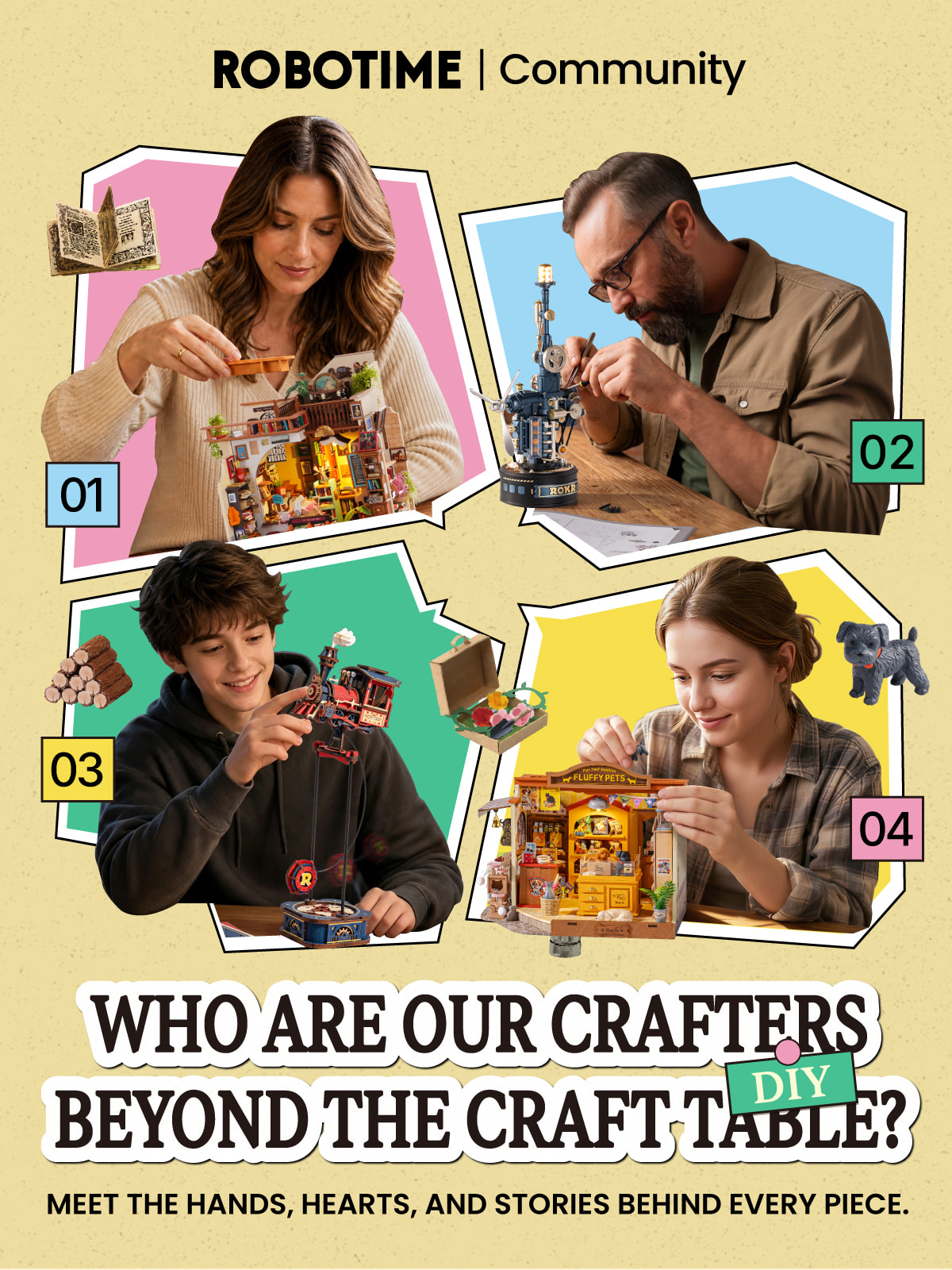
A nurse finishes a shift and reaches for a miniature kit. A parent finds a quiet moment between family responsibilities. A teacher, an illustrator, and an engineer each sit down to build the same tiny café. Looking through our ambassadors’ introductions reveals how many different lives meet at the craft table. This edition explores those everyday roles, from the most frequently mentioned to the less common, and asks how the experiences we have outside crafting might help explain what we enjoy within it.
Our community snapshot draws on our Ambassadors’ introductions and their own follow-up comments. Categories overlap and include current and former roles. The connections below are research-informed interpretations, rather than evidence that any profession is inherently more likely to enjoy crafting.
 Parents and Family Caregivers: Making Room for a Personal Identity
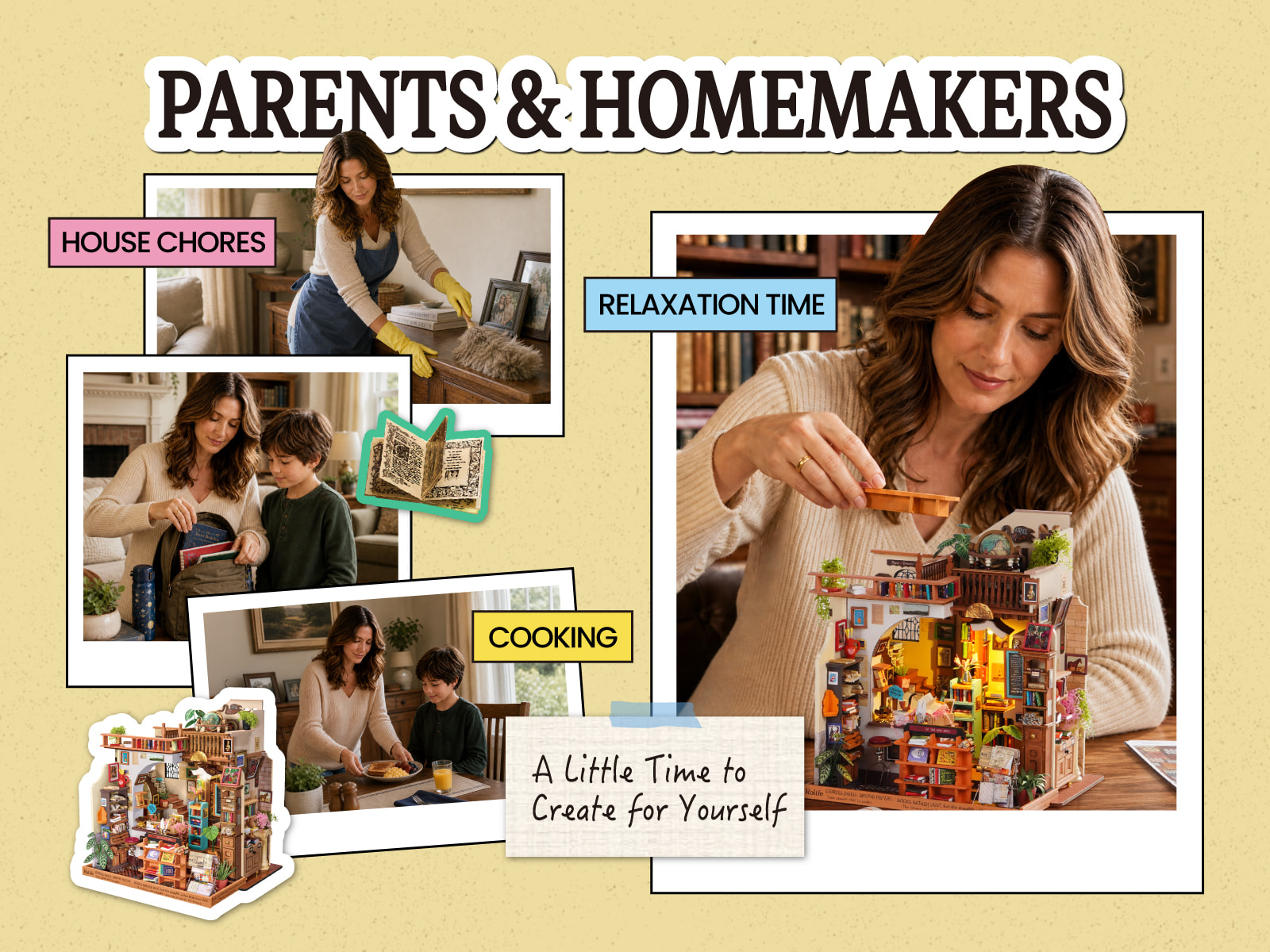
Parents, grandparents, and family caregivers form the largest group in these introductions. Their stories include raising children, supporting a family member’s daily needs, and discovering miniature building through their children.
Alongside these responsibilities, a craft project offers decisions that belong to the maker: which colour to choose, what to customise, and when to continue. Self-determination theory identifies autonomy, competence, and relatedness as basic psychological needs: having a say, feeling capable, and feeling connected. These concepts offer one way to understand the appeal of personal creative time. Ryan & Deci, 2000
For a parent whose day revolves around other people’s schedules, finishing a miniature bookshelf can become a small expression of personal choice. Building together can also create shared memories, as several ambassadors describe. The same hobby can make room for both individuality and family connection.
 Healthcare and Professional Care: Why Crafting May Feel Restorative

This group includes nursing, pharmacy, healthcare, elderly caregiving, and disability support backgrounds. Several members explicitly connect building with unwinding after caring for others.
Care work can require sustained emotional labour: managing one’s own feelings while remaining attentive and supportive. Hospice nursing illustrates this particularly clearly. In interviews with ten hospice nurses, researchers found that caring for dying patients could be both emotionally demanding and deeply meaningful, requiring an ongoing balance between personal feeling and professional responsibility. Ingebretsen & Sagbakken, 2016
This helps explain a possible connection with crafting. At the miniature table, attention can shift toward a concrete, self-paced task. A crooked shelf can be adjusted; an unfinished room can wait until tomorrow. For someone accustomed to responding to complex human needs, that bounded task may offer a welcome change in emotional demands.
There is also relevant intervention evidence. A randomised trial involving 129 healthcare professionals found lower emotional exhaustion after six weekly group art-therapy sessions compared with a waiting-list group. The intervention involved professional therapy, so its results cannot be directly attributed to hobby kits. It does, however, provide evidence that structured creative experiences can contribute to supporting healthcare workers. Tjasink et al., 2025
The plausible connection is between the demands of caring and the opportunity for personal recovery. Our introductions show that some caregivers experience crafting in precisely that way.
 Administration, Finance, and Coordination: Choosing Your Own Pace
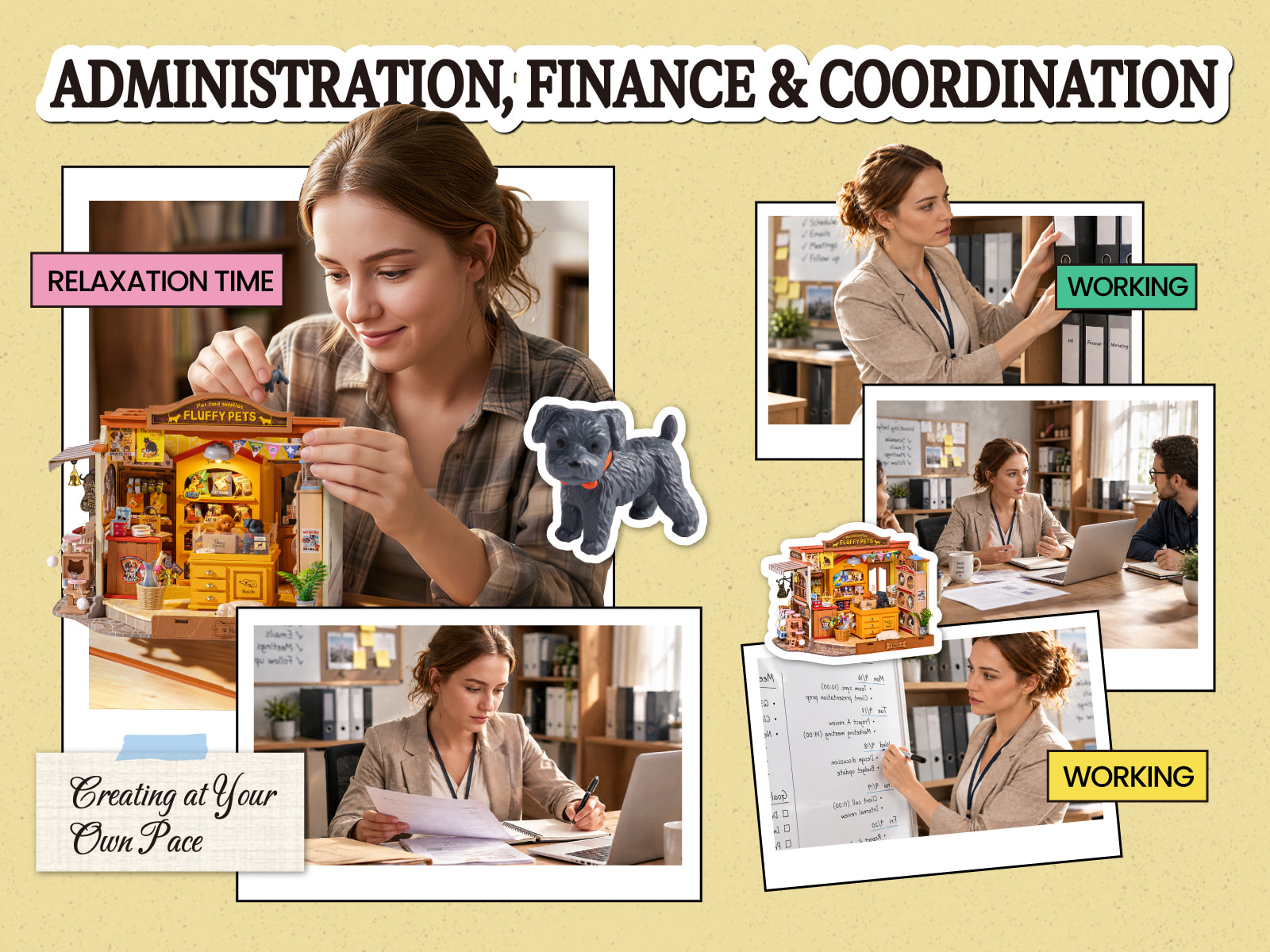
Accounts, office management, public administration, freight forwarding, transport coordination, and mortgage support appear in our community stories. Several members describe deadlines, irregular hours, and the need to keep many details moving.
Occupational psychologists distinguish four recovery experiences: psychological detachment, relaxation, mastery, and control. Recovery can therefore involve learning or making something, as well as resting. Sonnentag & Fritz, 2007
A miniature project offers a useful illustration. The next step is visible, progress accumulates, and the maker can decide when to stop. For someone who spends the day coordinating external demands, the appeal may lie in having a project whose pace is finally their own.
 Artists, Designers, and Content Creators: Creating on Personal Terms
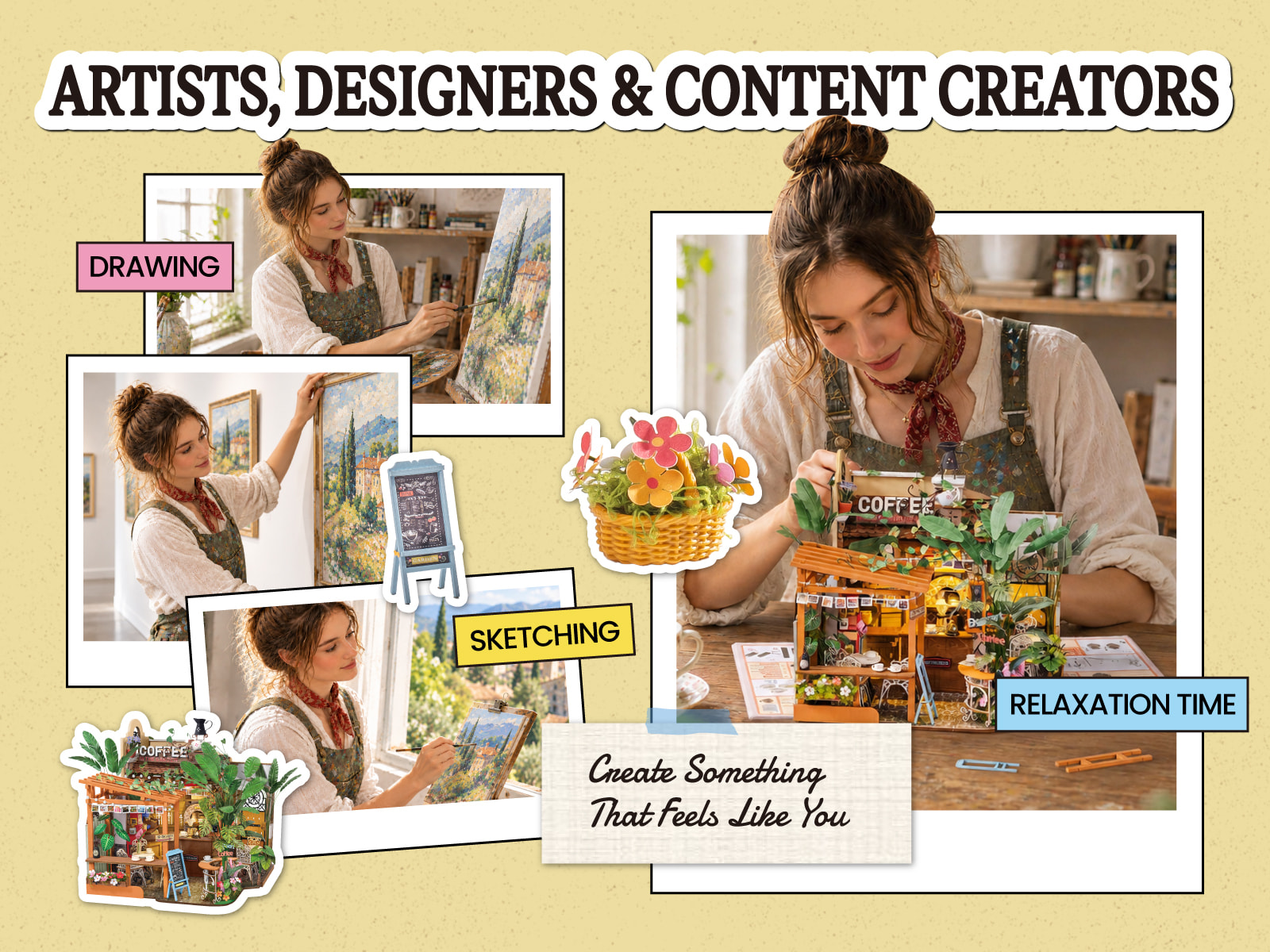
Our introductions also include illustration, professional performance, commercial design, framing, creative businesses, and content creation.
For these makers, crafting may continue an existing creative identity while changing its conditions. A personal miniature does not necessarily need to satisfy a client brief or become the next piece of content. It can simply reflect a favourite colour, a remembered place, or a playful idea.
Self-determination theory helps distinguish doing something from personal interest from doing it under external pressure. Applied here, it suggests that the freedom surrounding an activity can matter alongside the activity itself. Ryan & Deci, 2000
A familiar creative skill may feel different when the maker gets to decide what counts as success.
 Educators: A Space to Explore Without Assessing
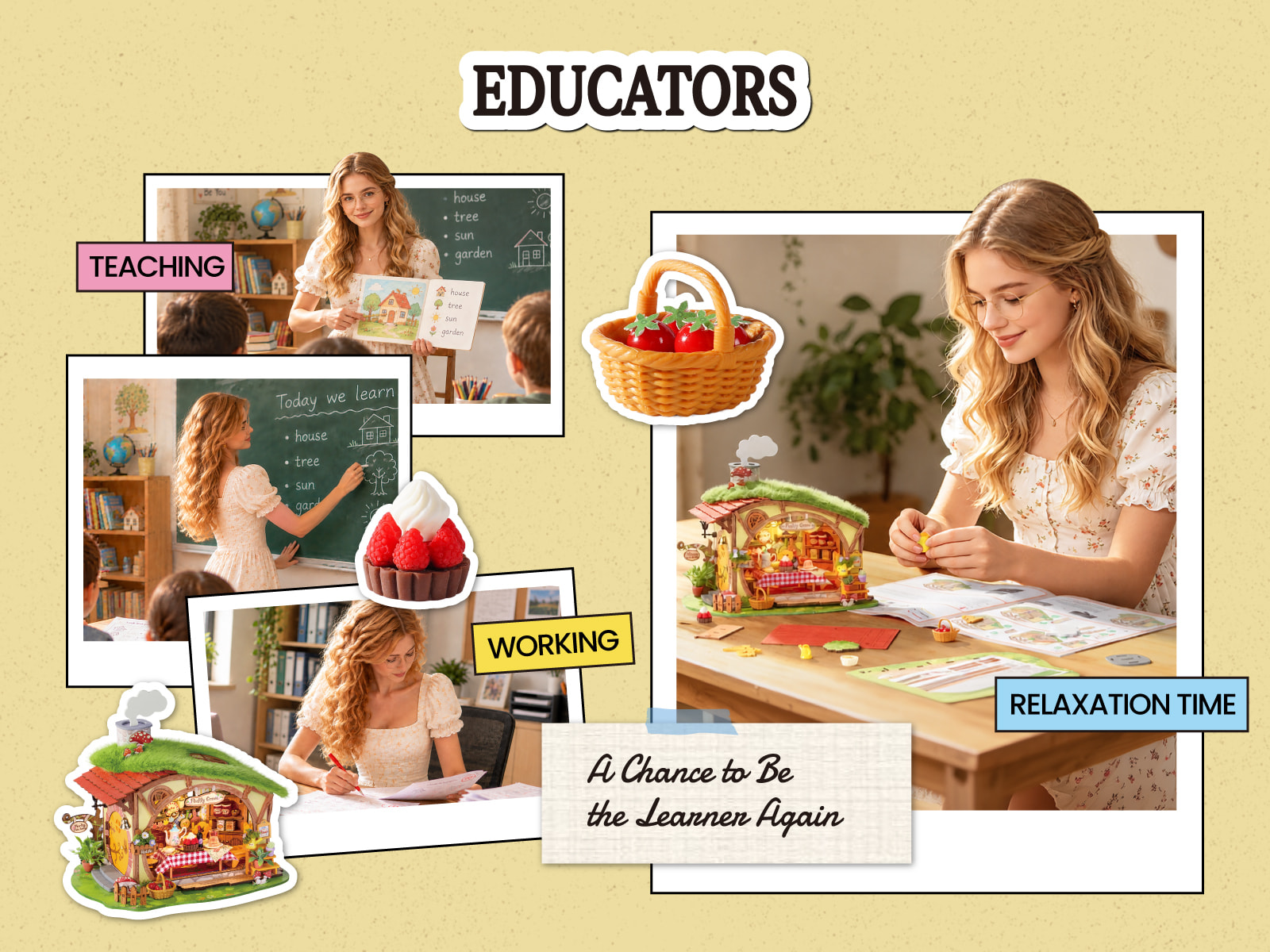
Primary teaching, nursing education, sociology instruction, instructional design, and craft teaching all appear in the introductions.
Teaching involves more than explaining information. A meta-analysis covering 33,248 teachers found that different ways of managing emotional expression had different relationships with burnout and job satisfaction. In particular, displaying emotions that did not match inner feelings was associated with greater burnout. Yin, Huang, & Chen, 2019
For an educator, a personal build may offer a space where nobody needs to be assessed and an imperfect first attempt is simply part of learning. The appeal could combine familiar curiosity with a temporary release from responsibility for someone else’s progress.
At this table, the teacher gets to be the learner again.
 Engineering, IT, Data, and Quality Control: A Satisfying Problem to Solve

These backgrounds range from programming and systems administration to data analysis, engineering, equipment calibration, and food quality control.
A build can preserve the pleasure of understanding how things work while giving that thinking a different purpose. Instead of resolving a workplace issue, the maker might investigate why a gear catches or how a tiny light fits into a room.
Research on creative activities outside work found positive associations with mastery, control, and relaxation. This suggests that an engaging challenge can coexist with recovery. Eschleman et al., 2014
For these members, miniature building may offer a personally chosen problem with a tangible result. The connection is plausible; it does not mean that building kits has been shown to improve their professional technical skills.
 Sales, Retail, and Hospitality: Time Beyond the Next Request
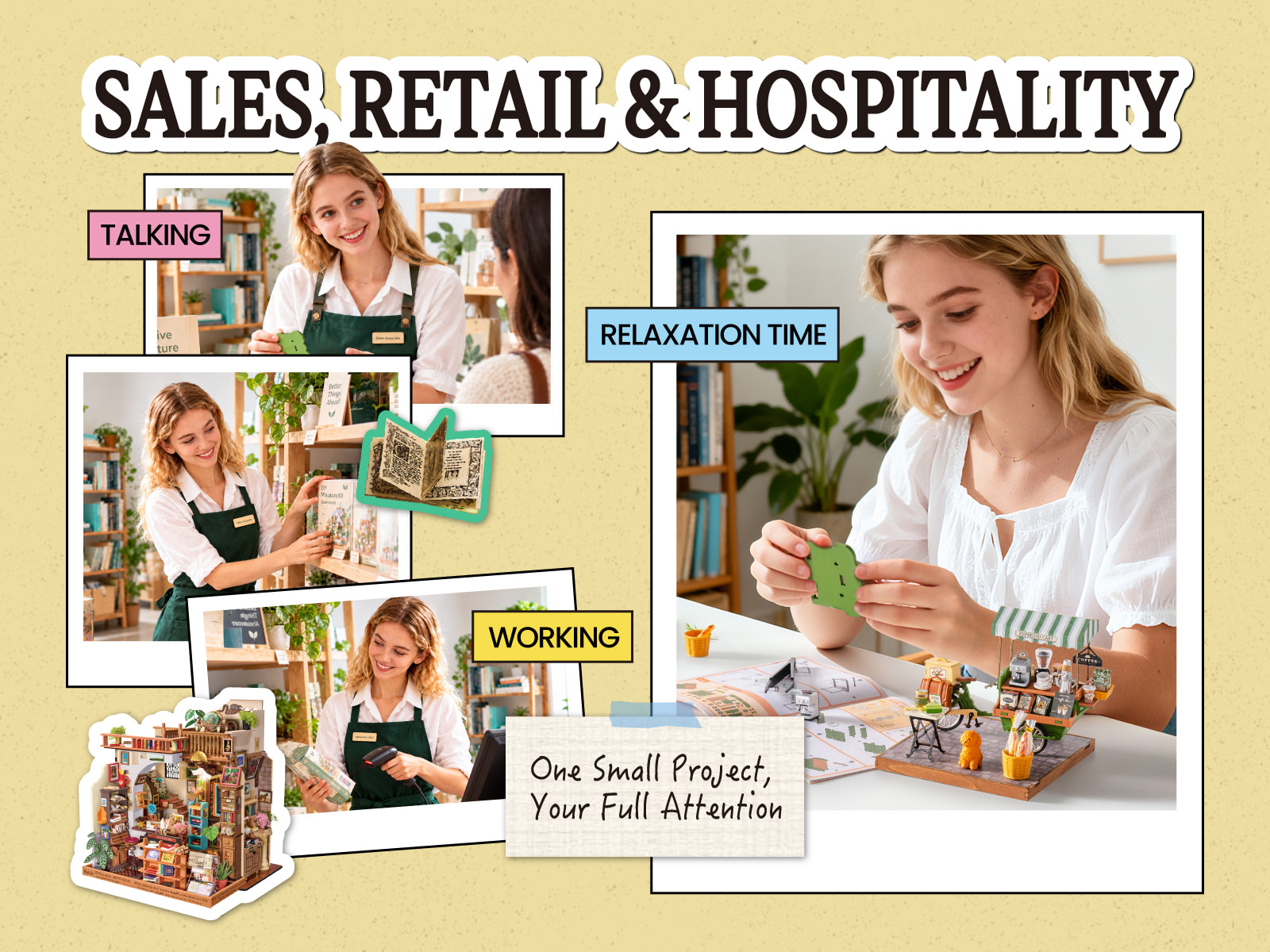
Sales, retail, online selling, front-desk work, and hostel work bring another set of experiences to the craft table.
Customer-facing work often organises attention around the next interaction. A personal build allows the maker to settle into one task for a while. In recovery research, psychological detachment means becoming mentally removed from work during time away from it. Sonnentag & Fritz, 2007
Crafting may provide that transition for some people: the next thing requiring attention is a miniature window rather than another request. One ambassador also describes displaying finished models at work, where they become conversation starters. A private creative interest can become something enjoyable to share.
 Retirement and Time Away from Work: Giving the Day a New Shape
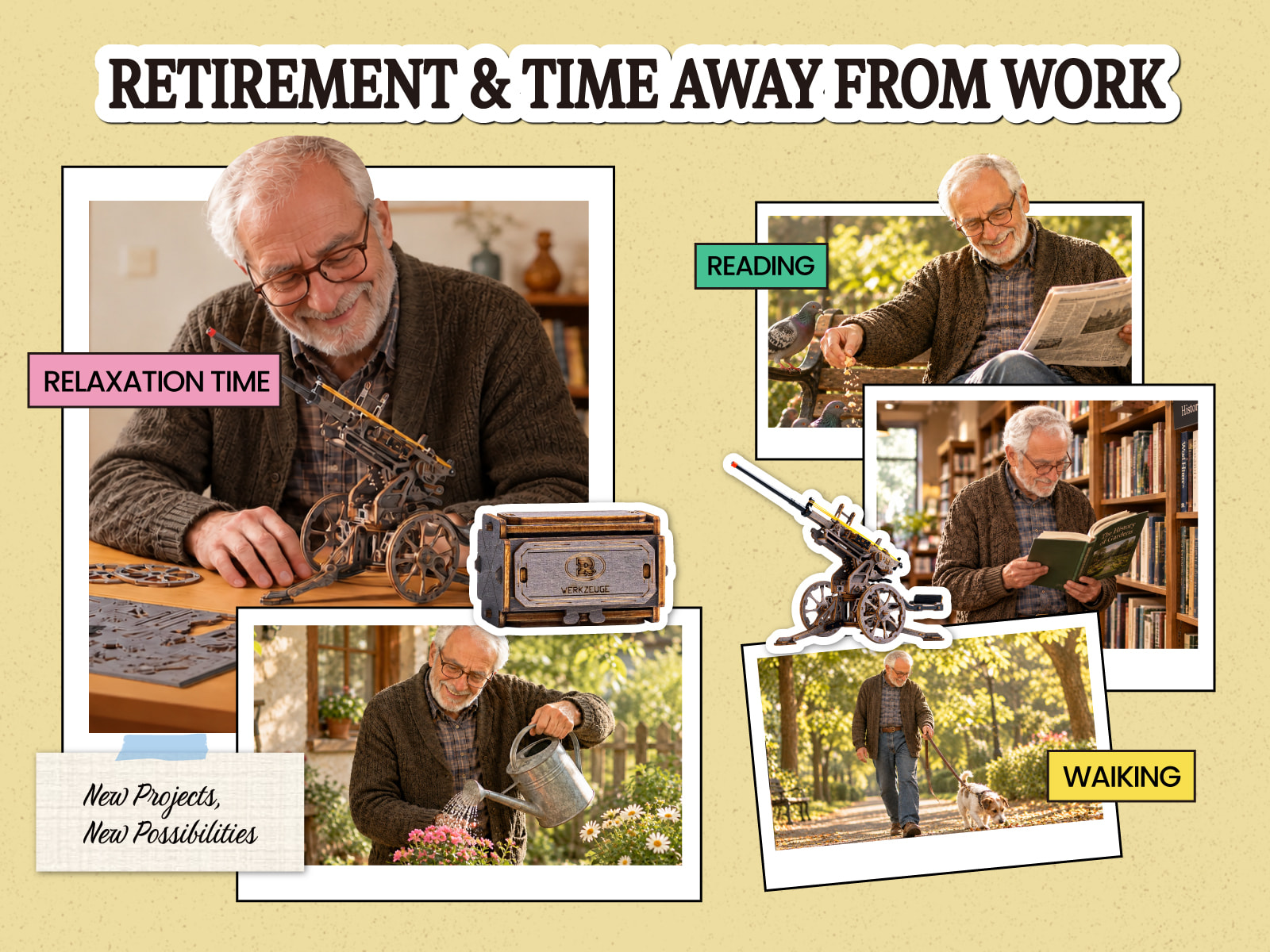
Some ambassadors are retired or semi-retired; another describes leaving care work because of health circumstances. Their situations differ, but their stories show how a hobby can become part of a changing daily routine.
In a qualitative study of six retired people attending art classes, participants described satisfaction, challenge, achievement, and increased confidence. These accounts help illustrate how creative activity can give retirement structure and personal meaning. Bedding & Sadlo, 2008
A new build offers something to anticipate. Learning a technique gives the week a direction. Sharing the result invites conversation. An ambassador who once wondered how retirement would feel now describes both time and shelves filled with projects.
 Students: Curiosity Beyond the Assignment
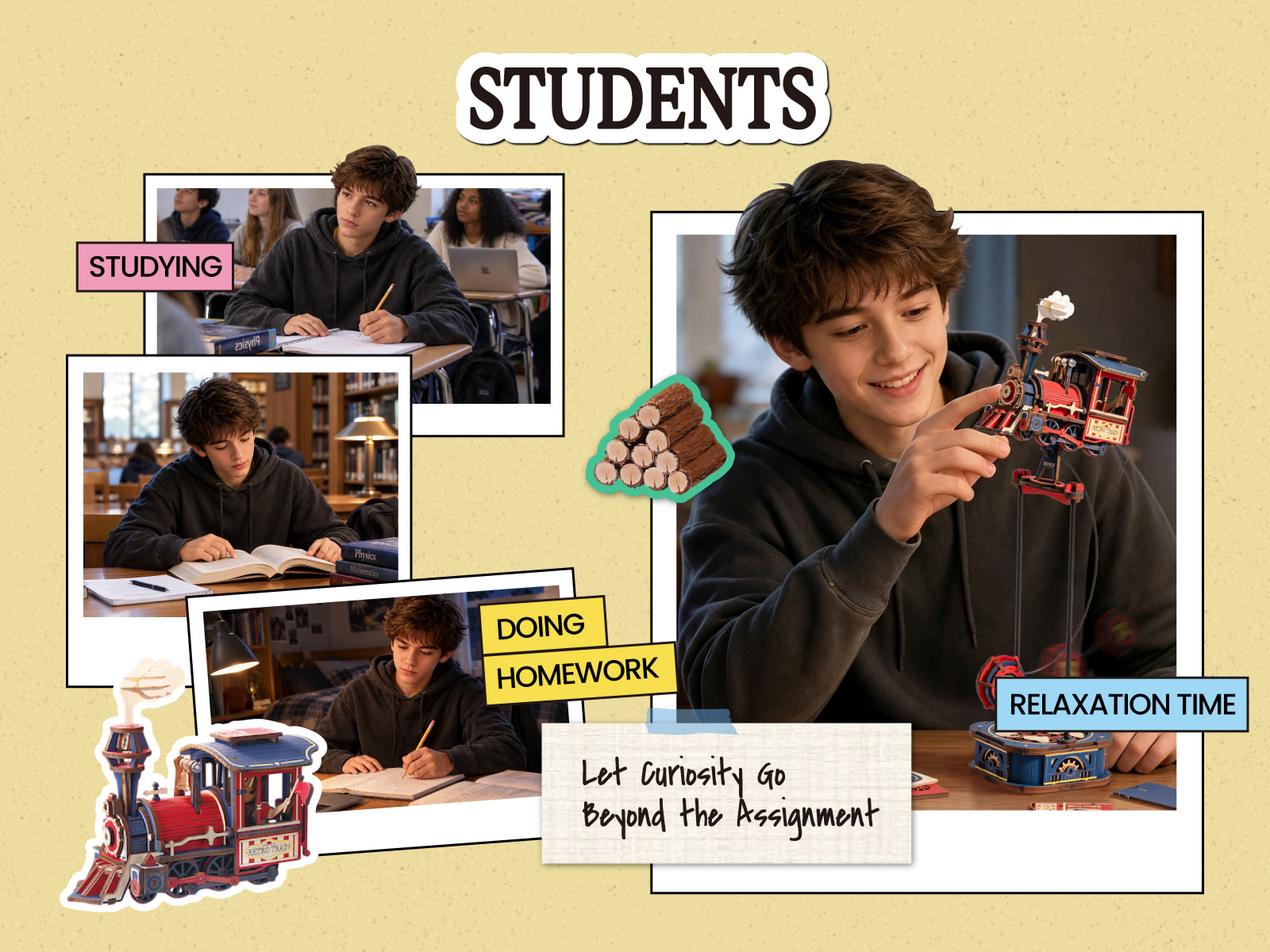
The students in our introductions are pursuing finance, graphic design, and architecture. Their craft tables sit alongside very different kinds of coursework.
A 13-day diary study involving 658 young adults found that days with more creative activity than usual were followed by greater positive affect and flourishing. It was an observational study, rather than a trial proving that creativity caused these changes. Conner, DeYoung, & Silvia, 2018
For a student, building might offer a self-directed creative experience outside assessment. An architecture student may enjoy a familiar interest in models; a finance student may welcome a different medium altogether. Both can choose a challenge simply because it interests them.
 Construction and House Painting: Familiar Materials, Personal Accomplishment
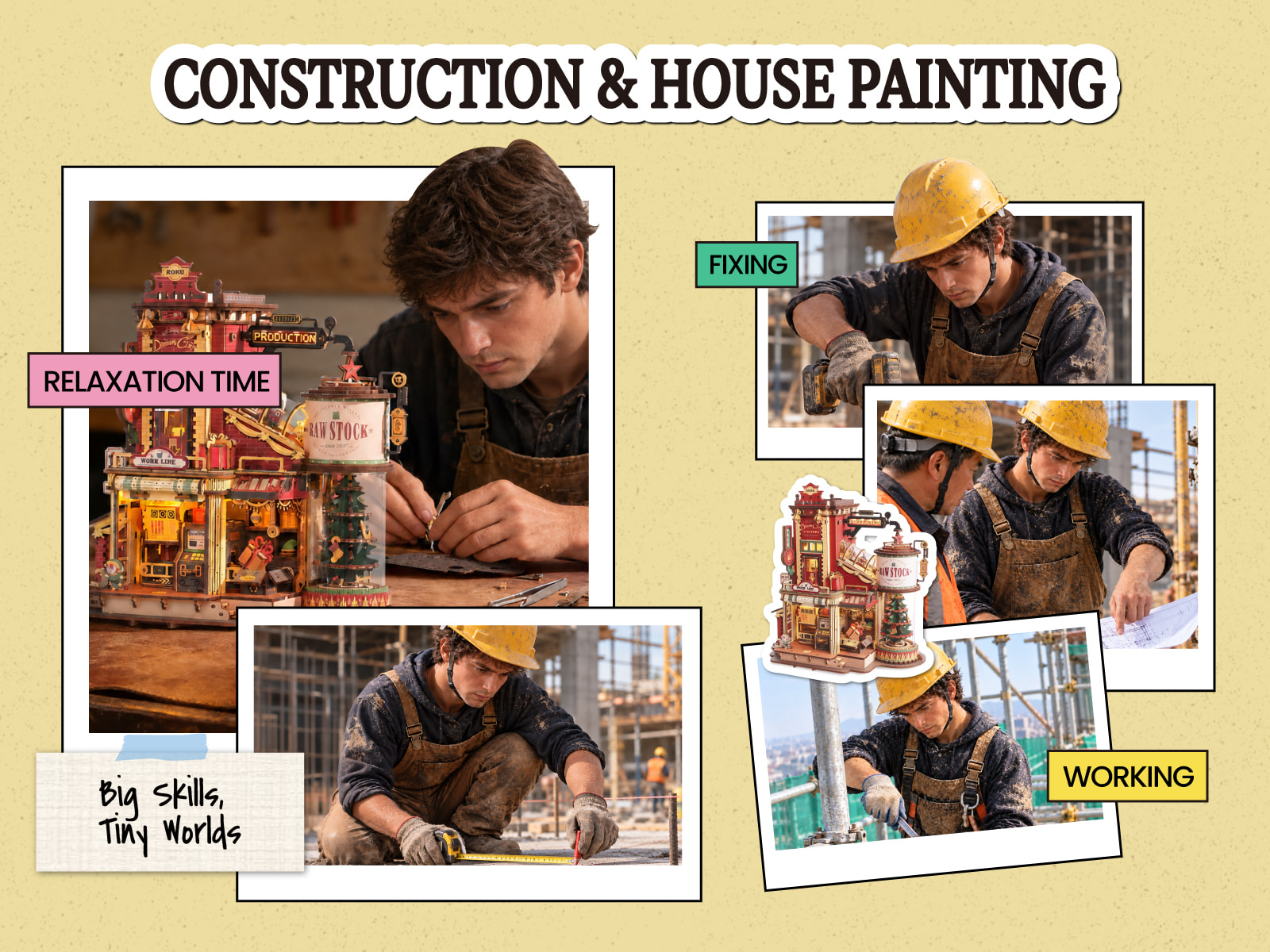
Our community includes people who build and finish spaces at full scale. Their hobbies bring houses, surfaces, and details down to a size that fits on a table.
Research into the IKEA effect found that people placed greater value on objects they had successfully helped make. Successful completion was an important condition of that effect. Norton, Mochon, & Ariely, 2012
This offers one explanation for the pride attached to a finished miniature. It contains visible evidence of effort. For someone accustomed to making things professionally, a personal project may also offer the pleasure of choosing the finish and keeping the result.
 Different Roles, Shared Reasons to Make
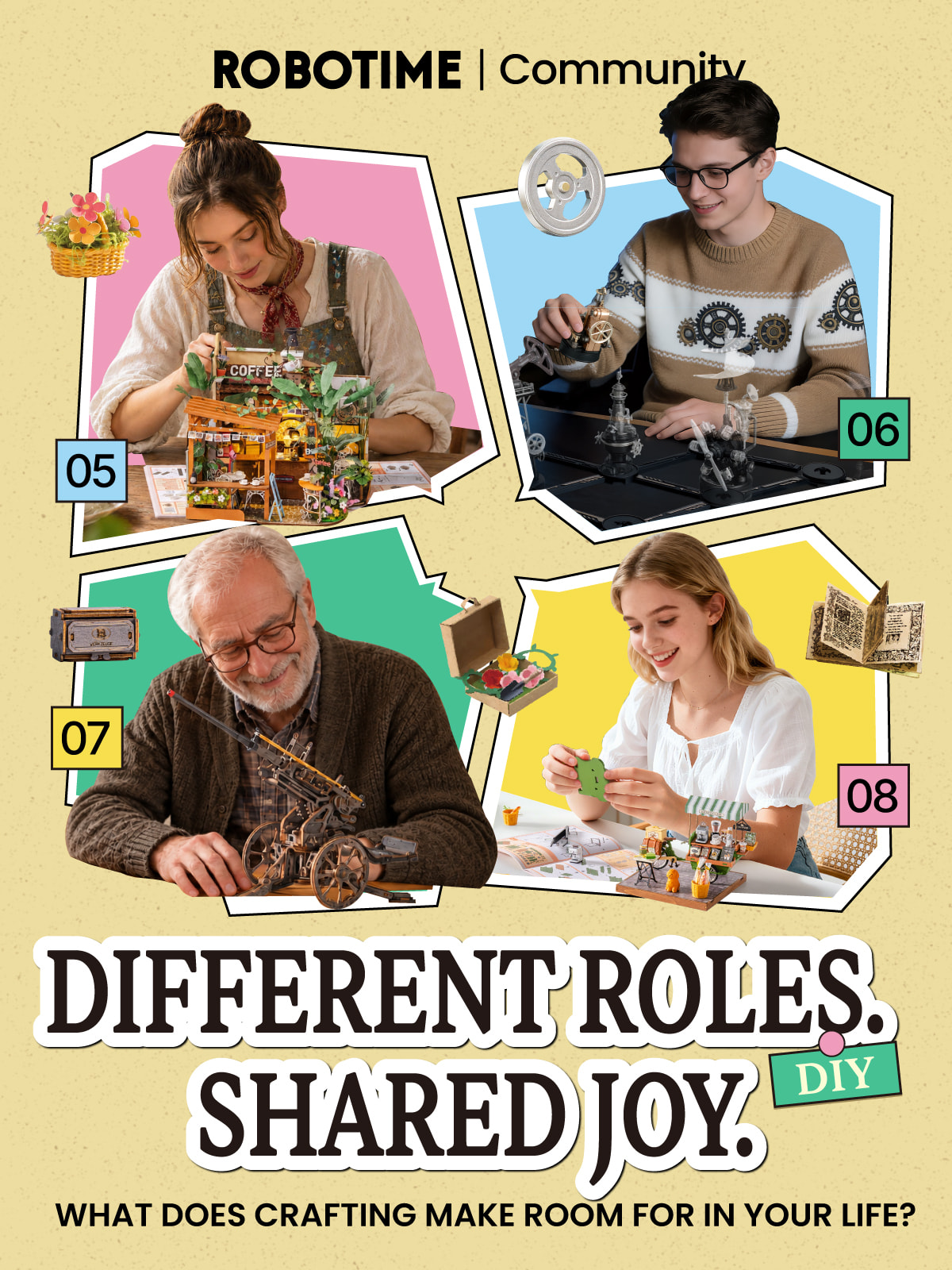
These introductions reveal many possible routes to the same craft table: personal time, emotional recovery, curiosity, achievement, and connection. A study of 7,182 adults found that participation in arts and crafts was associated with greater happiness, life satisfaction, and a sense that life was worthwhile, even after accounting for several demographic factors. That association does not establish causation, but it places our members’ experiences within a wider research conversation. Keyes et al., 2024
Our everyday roles may influence what we seek from a hobby. At the craft table, we also get to express parts of ourselves that a job title cannot capture.
What roles do you carry in everyday life—and what does crafting make room for in yours?
References
-
Ryan, R. M., & Deci, E. L. (2000). Self-determination theory and the facilitation of intrinsic motivation, social development, and well-being. American Psychologist, 55(1), 68–78.
-
Ingebretsen, L. P., & Sagbakken, M. (2016). Hospice nurses’ emotional challenges in their encounters with the dying. International Journal of Qualitative Studies on Health and Well-being, 11, 31170.
-
Tjasink, M., et al. (2025). Art therapy to reduce burnout and mental distress in healthcare professionals in acute hospitals: a randomised controlled trial. BMJ Public Health, 3, e002251.
-
Sonnentag, S., & Fritz, C. (2007). The Recovery Experience Questionnaire: Development and validation of a measure for assessing recuperation and unwinding from work. Journal of Occupational Health Psychology, 12(3), 204–221.
-
Yin, H., Huang, S., & Chen, G. (2019). The relationships between teachers’ emotional labor and their burnout and satisfaction: A meta-analytic review. Educational Research Review, 28, 100283.
-
Eschleman, K. J., Madsen, J., Alarcon, G., & Barelka, A. (2014). Benefiting from creative activity: The positive relationships between creative activity, recovery experiences, and performance-related outcomes. Journal of Occupational and Organizational Psychology, 87(3), 579–598.
-
Bedding, S., & Sadlo, G. (2008). Retired people’s experience of participation in art classes. British Journal of Occupational Therapy, 71(9), 371–378.
-
Conner, T. S., DeYoung, C. G., & Silvia, P. J. (2018). Everyday creative activity as a path to flourishing. The Journal of Positive Psychology, 13(2), 181–189.
-
Norton, M. I., Mochon, D., & Ariely, D. (2012). The IKEA effect: When labor leads to love. Journal of Consumer Psychology, 22(3), 453–460.
-
Keyes, H., et al. (2024). Creating arts and crafting positively predicts subjective wellbeing. Frontiers in Public Health, 12, 1417997.
 . Theres always something going on whether it’s homework, studying, or just trying to keep up with everything, so crafting gives me a chance to slow down for a bit and just do something because I actually enjoy it.
 . Most importantly, it gives me something to look forward to and a way to relax without feeling like I always have to be doing something “productive.” Sometimes I just wanna sit down, build something cool, and enjoy the process, and I think that’s what crafting makes room for in my life.


