 More Than a Kit: A World of My Own For Fall
My Journey into an Autumn Treehouse
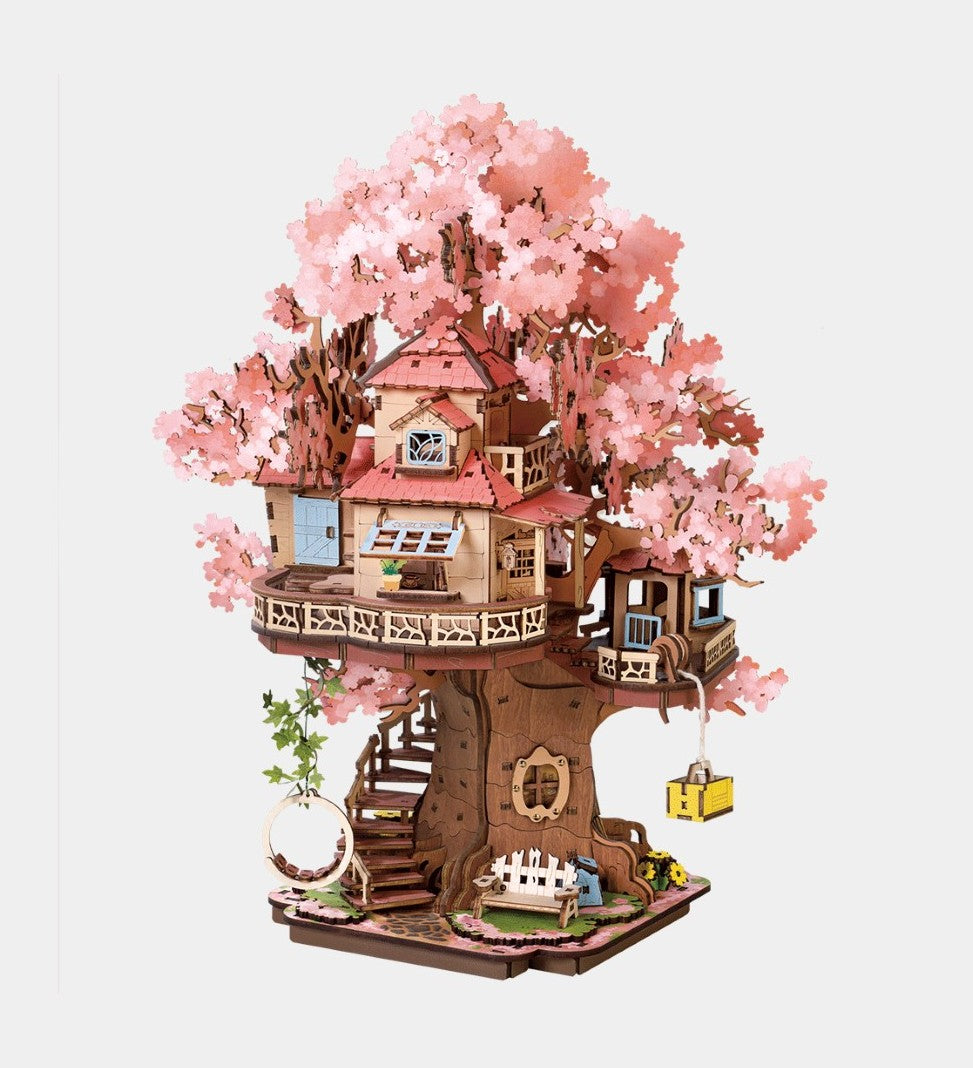
I have always believed that when you build something, you should leave a little piece of yourself in it. When I first built the Sakura Treehouse, I added sakura petals to make it feel like my own creation. It was a small change, but it taught me something important: following the instructions is only the beginning. What makes a build special is the imagination, creativity, and personal touches we bring to it.
With every kit that followed, I learned something new. I experimented, developed new skills, and found myself looking for ways to push each creation a little further. Looking back, I realize that all those little lessons were preparing me for the Robotime World Challenge. For this build, I wanted to create something big and bold, something that captured the beauty of fall and felt like an entire little world waiting to be explored.
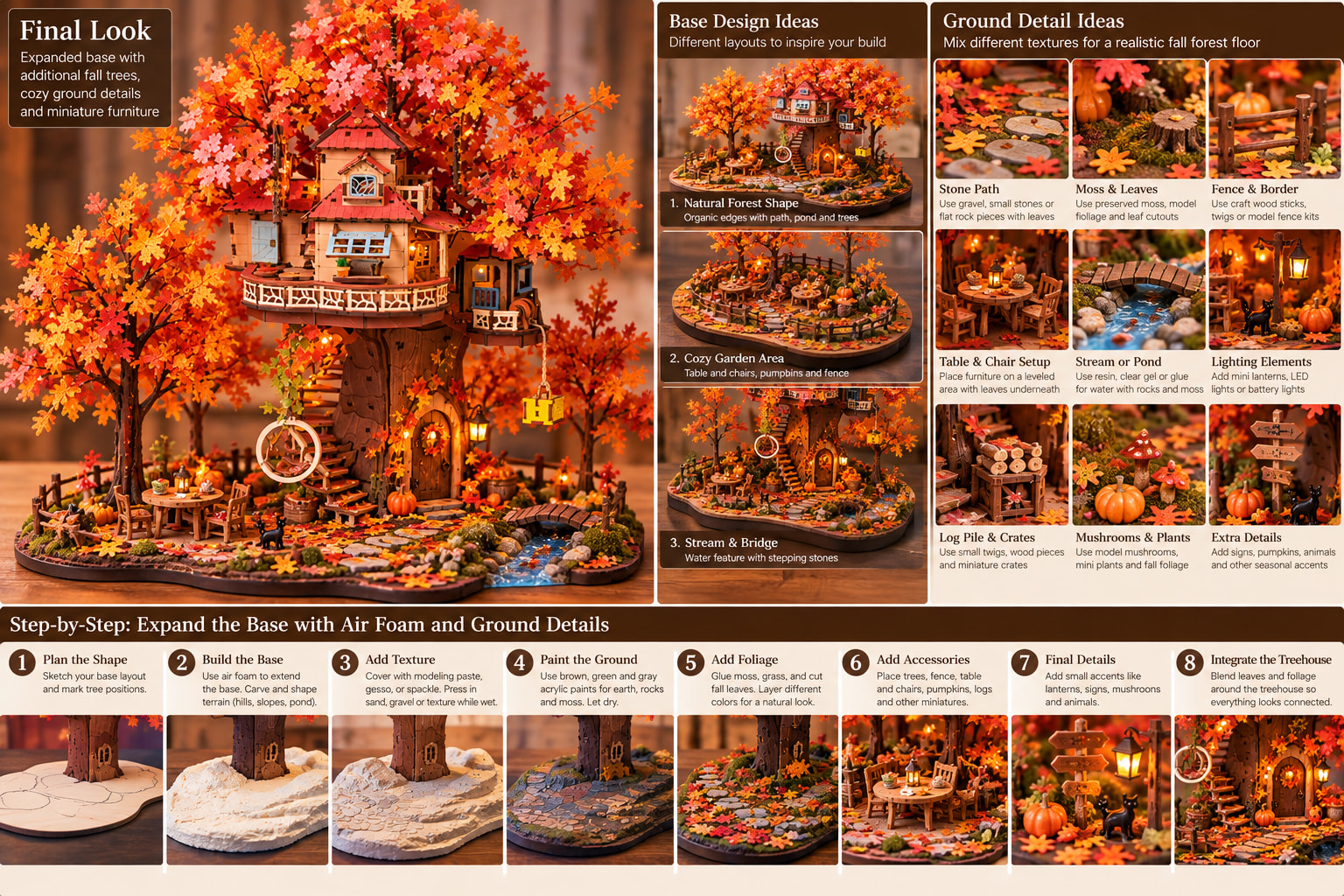
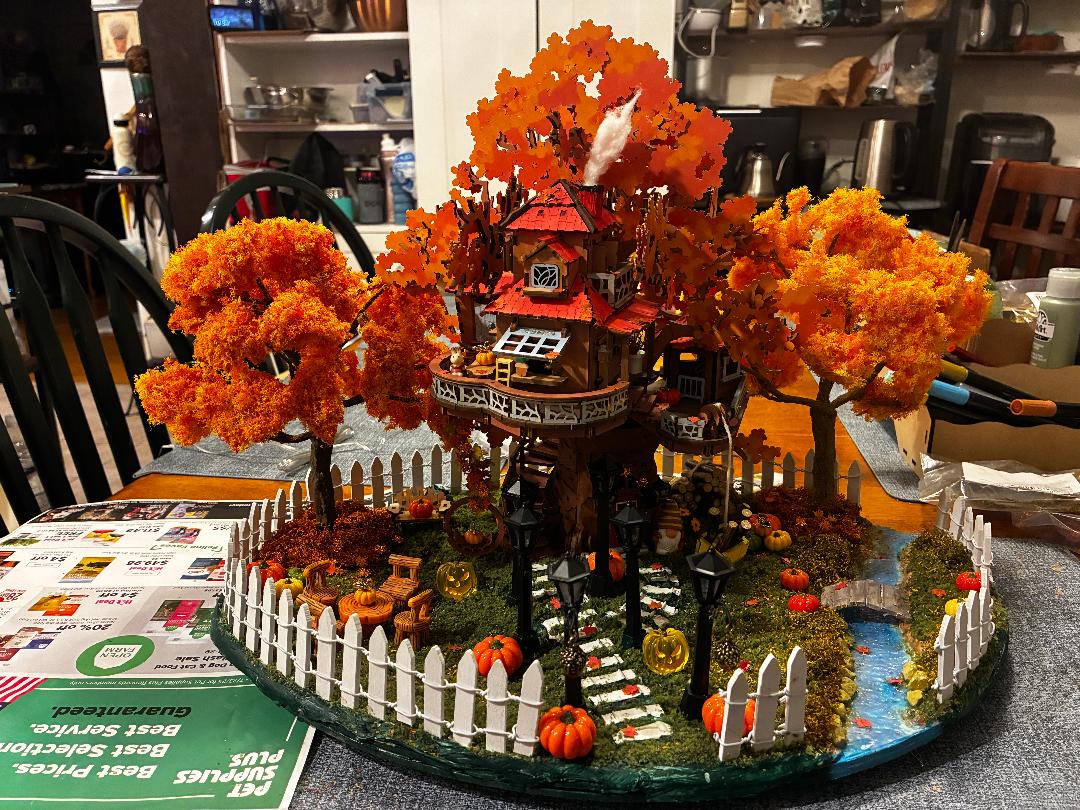
Fall has always been a special time for me. I love the fiery colors of the leaves, the pumpkins scattered throughout the landscape, and the cozy feeling that comes with the changing season. I wanted to capture that feeling in a miniature scene, with a treehouse nestled among brilliant autumn foliage, a winding stream, and a pathway illuminated by warm lights. I wanted people to look at it and imagine themselves stepping inside, wandering beneath the trees, and finding a little refuge from the cooling autumn air.
Lighting was going to be a big part of bringing that vision to life. It has always been one of my favorite aspects of building, and this time I wanted to challenge myself to do more than I had ever done before.
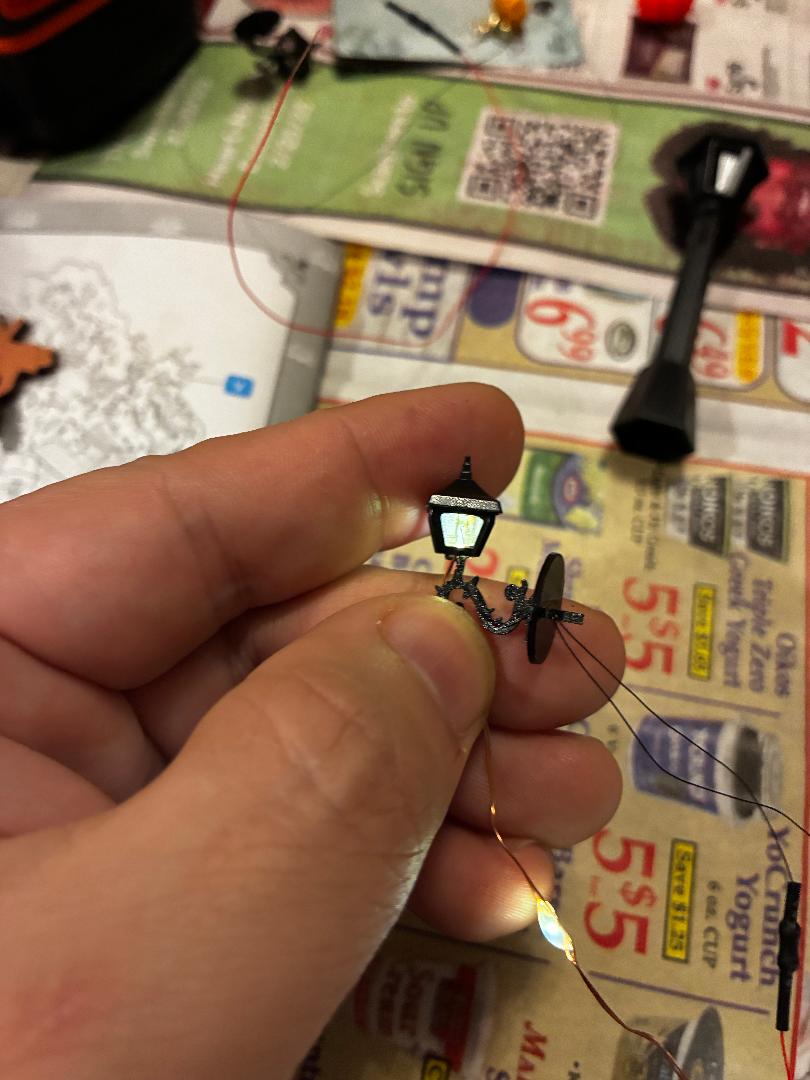
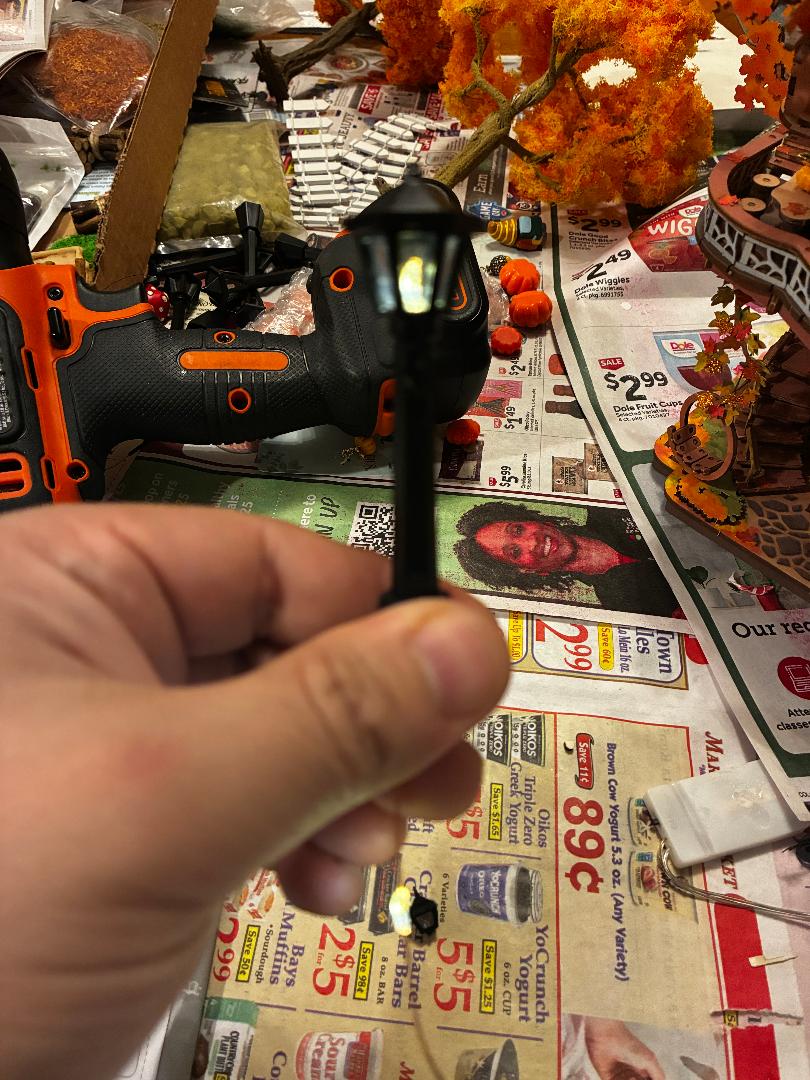
The first challenge came from the lamp posts in the accessory kit. I pictured tiny lights glowing along the pathway, but the posts were so thin that fitting fairy lights inside seemed almost impossible. Rather than give up on the idea, I carefully drilled into the base and gradually widened the openings, working each tiny LED into position. It took patience and a fair amount of trial and error, but little by little, the lights found their way into place.
Then came one of those unexpected moments that makes building so enjoyable. I had more lights than I originally planned to use and briefly considered creating an illuminated pathway. While experimenting, I discovered that the little pumpkins included with the kit could also glow if positioned just right. What initially seemed like a problem turned into a happy accident, and the illuminated pumpkins added exactly the kind of autumn magic I had hoped to create.
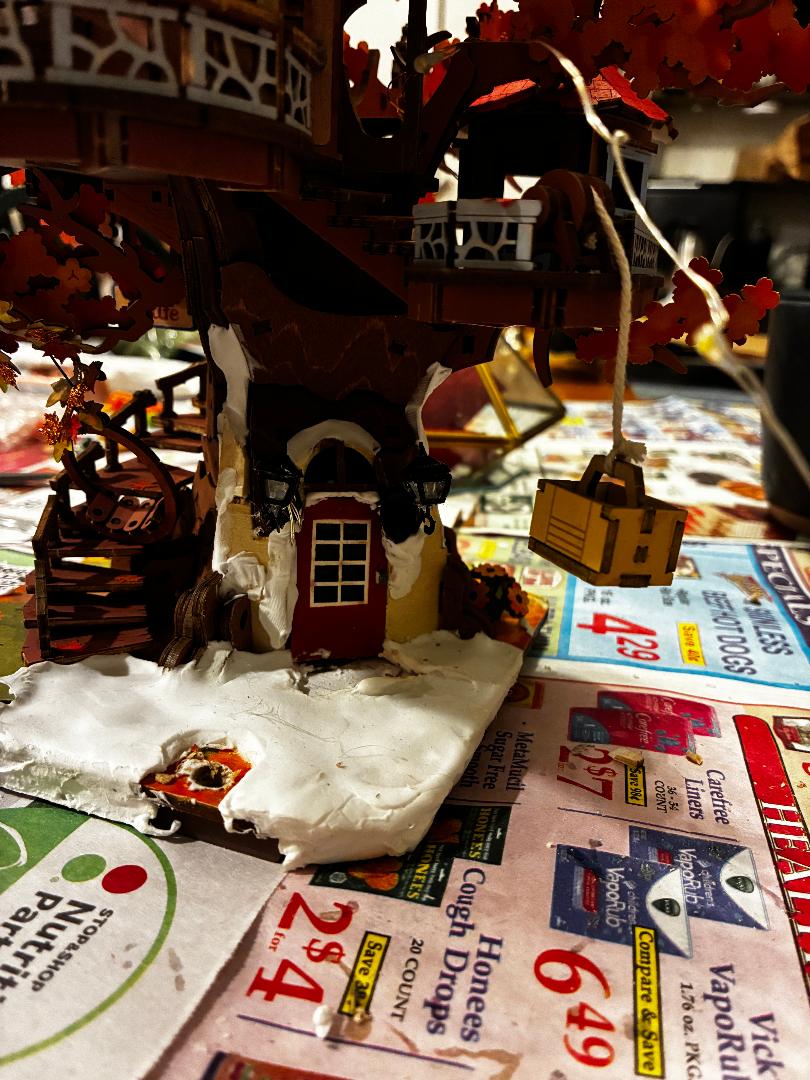
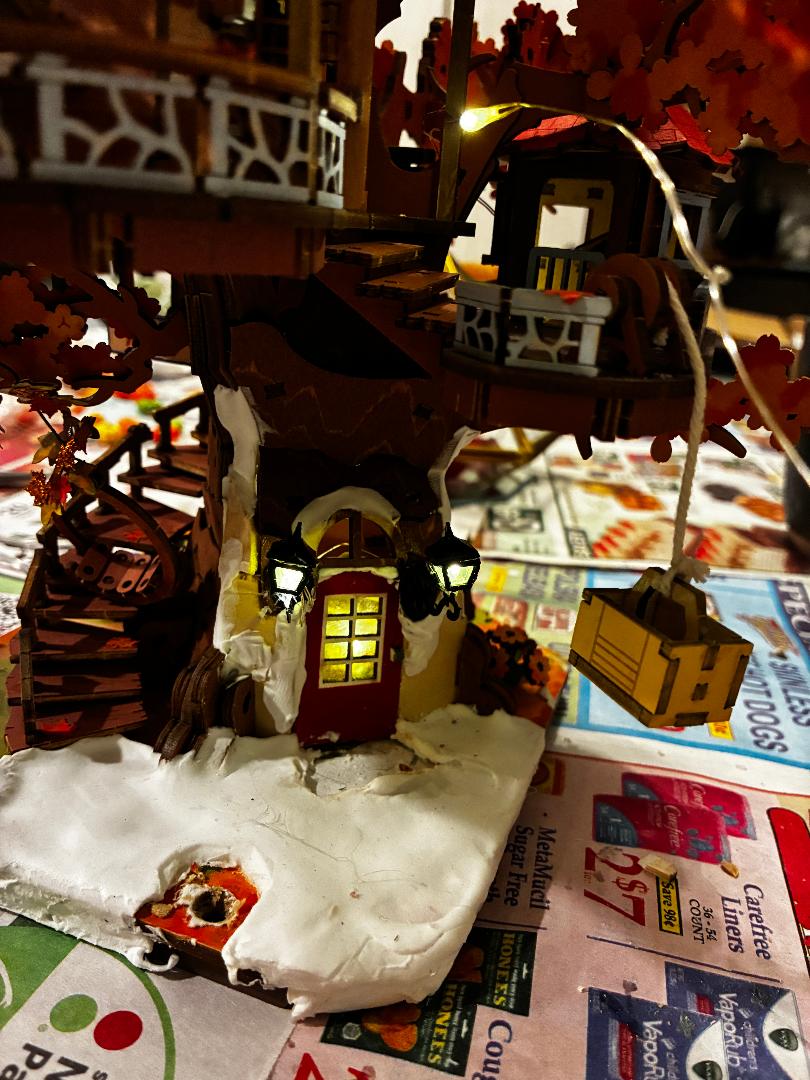
There was another part of the original kit that I had never quite been satisfied with: the window at the base of the treehouse. There was nothing behind it, and I wanted the house to feel like a real home rather than simply a beautiful structure. So I reworked the entrance and transformed that area into a little kitchen, complete with a door and its own light.
This meant rethinking how the wiring would travel through the entire build. Using techniques I had developed with previous kits, I routed the LED string through the base, up the tree, and into the observatory and individual rooms. I wanted the lights to feel as though they belonged naturally within the house, not as though they had simply been added afterward. Hiding the wiring became just as important as placing the lights themselves. Compared with my earlier builds, I wanted a cleaner finish, and I spent a great deal of time making the details work together.
Of course, the treehouse needed a world around it.
I expanded the base using air foam and oval canvas boards, giving myself room to create a landscape that felt more complete. Before securing anything, I carefully mapped out the positions of the trees and lamp posts, making sure the composition was balanced and the base remained level. I also had to plan the wiring routes beneath the surface so that the lights could reach the lamp posts without leaving a mess of wires in view.
Even the smallest details required attention. The two little lights beside the entrance needed several adjustments before I was happy with how they looked. These might seem like minor things, but I have learned that small details can make a surprising difference to the overall feeling of a miniature scene.
I also wanted the landscape to invite the viewer to look beyond the treehouse itself. A winding river now runs through the base, with carefully shaped riverbanks and a little stone bridge connecting the two sides. The stream adds movement to the scene and gives the landscape a sense of depth, as though the treehouse has stood in this woodland for years and the river has always flowed beneath its branches.
At this stage, I could have stopped. The scene already had its autumn colors, its illuminated pathway, its pumpkins, and its cozy interior. I was proud of what I had accomplished, and it would have been easy to call it finished.
But I kept thinking about the trees.
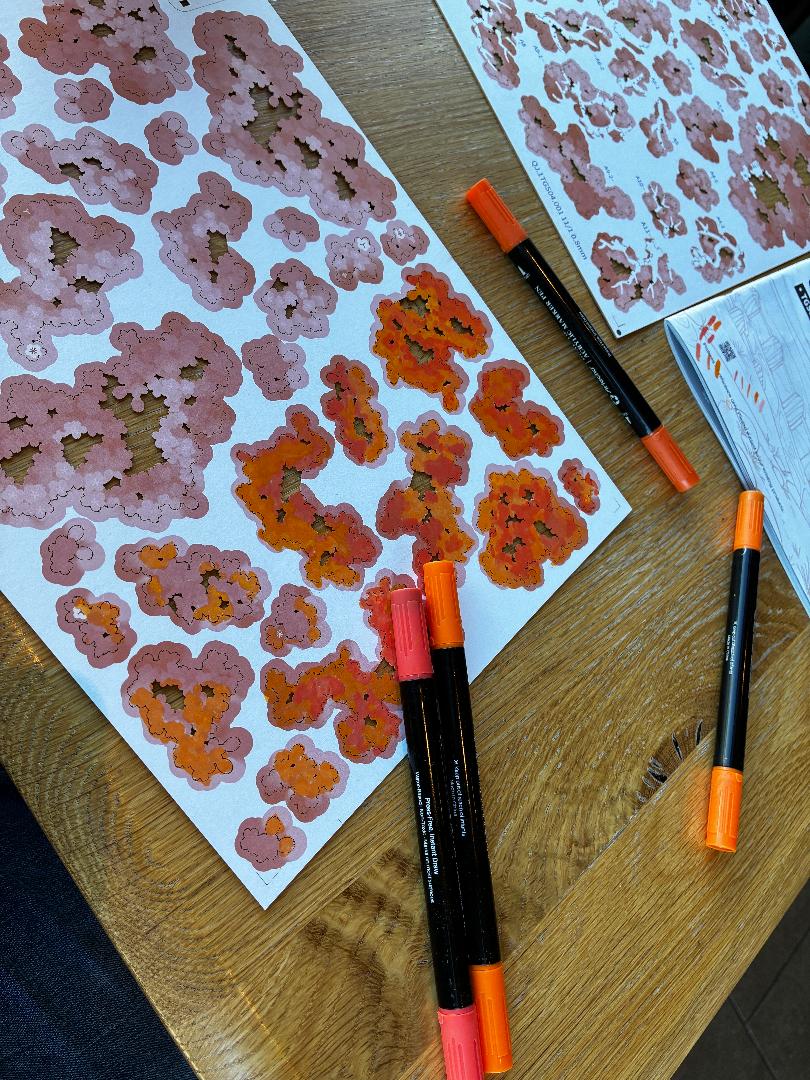
I wanted them to do more than provide a beautiful canopy. I wanted them to glow with the changing colors of fall, so I added special multicolored lights throughout the foliage. This was another opportunity to improve on my previous work, particularly when it came to concealing the wiring. I took greater care to hide the LED strings, and the finished result looks much cleaner from the front.
Where a wire still showed through the foliage, I used a small paper punch to make tiny maple leaves and carefully placed them over the exposed areas. It was a simple solution, but it helped the wiring disappear into the scenery while adding another layer of natural detail. Those little leaves became more than a way to hide the mechanics; they helped the trees feel fuller and more alive.
There was one final detail I wanted to add. With autumn settling in and colder weather approaching, the treehouse needed a chimney. It seemed only fitting that a home tucked among the fall leaves should have a warm fire inside. I added a hidden LED behind the chimney to create a soft glow, giving the house another touch of warmth and making the entire scene feel even more inviting.
When I look at the finished treehouse, I see much more than a collection of miniature parts, lights, and autumn decorations. I see the lessons I have learned from every build that came before it. I see the problems that forced me to think differently, the unexpected discoveries that became some of my favorite details, and the many little adjustments that turned an idea into something I could finally step back and feel proud of.
Most of all, I see how far I have come since that first Sakura Treehouse. Each project has given me the confidence to experiment, to customize, and to imagine what else might be possible. This time, I was able to bring all those experiences together to create a scene that feels personal to me.
I hope that when people look at this little autumn world, they see more than the treehouse itself. I hope they notice the glowing pumpkins, follow the path between the lamp posts, trace the river toward the stone bridge, and imagine the warmth waiting inside the house. I hope the colors and lights bring back that special feeling of fall, when the world seems to slow down for a moment and there is time to appreciate the little things.
That is what I love about customizing these kits. It is not simply about changing what is provided. It is about imagining what something could become and finding the patience and determination to bring that vision to life.
This autumn treehouse has been a deeply rewarding experience, and I am proud of what I have created. But perhaps the best part is knowing that I am still learning, still experimenting, and still finding new ways to make these miniature worlds my own.
As the leaves give way to winter, I am already looking forward to the next challenge. I wonder what new ideas, unexpected discoveries, and little moments of magic that journey will bring.
Enjoy the video at the end!

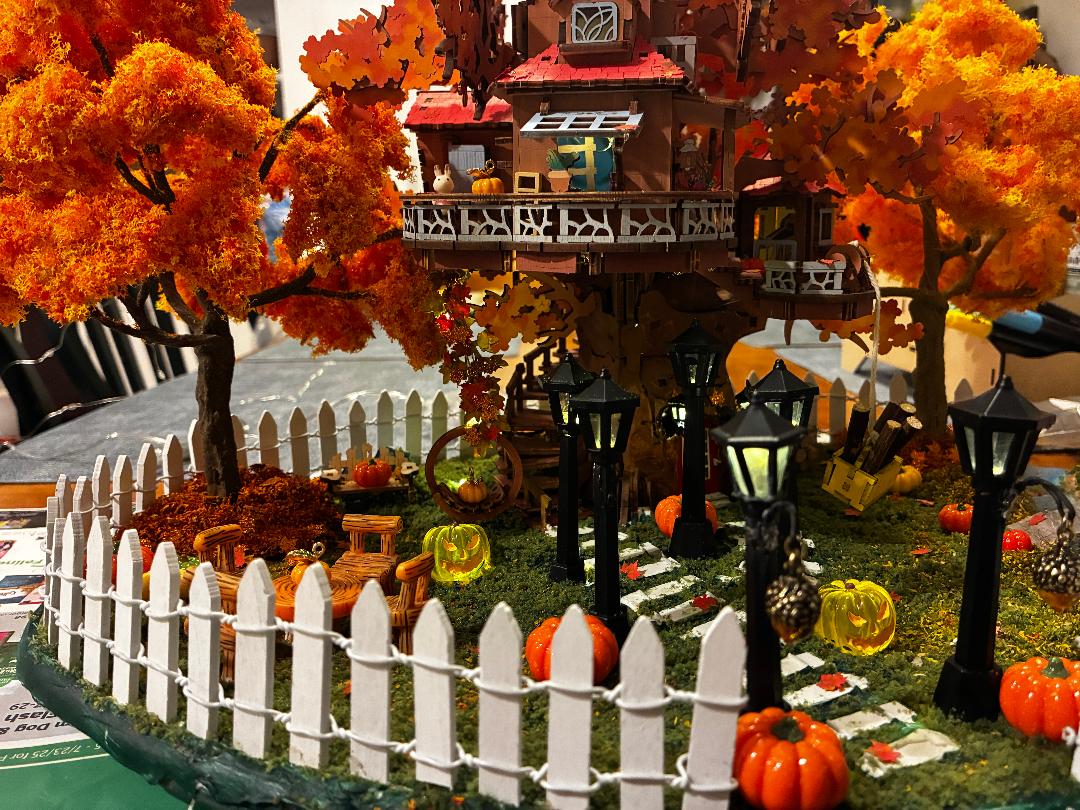
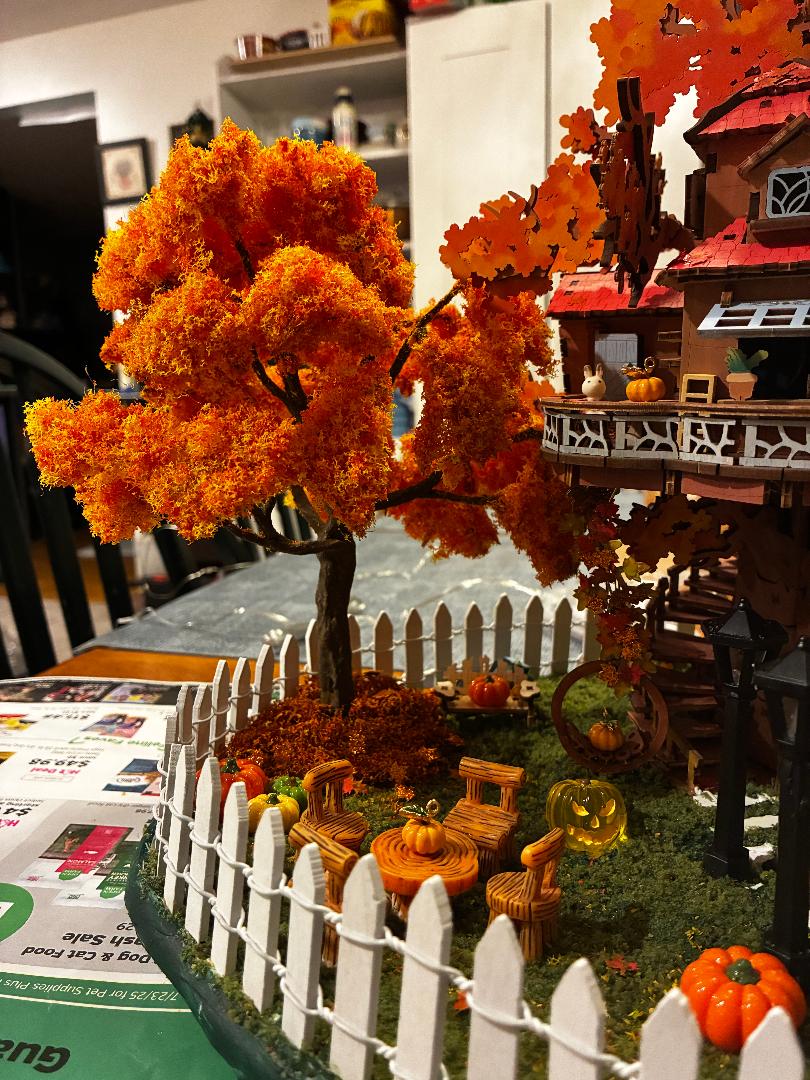
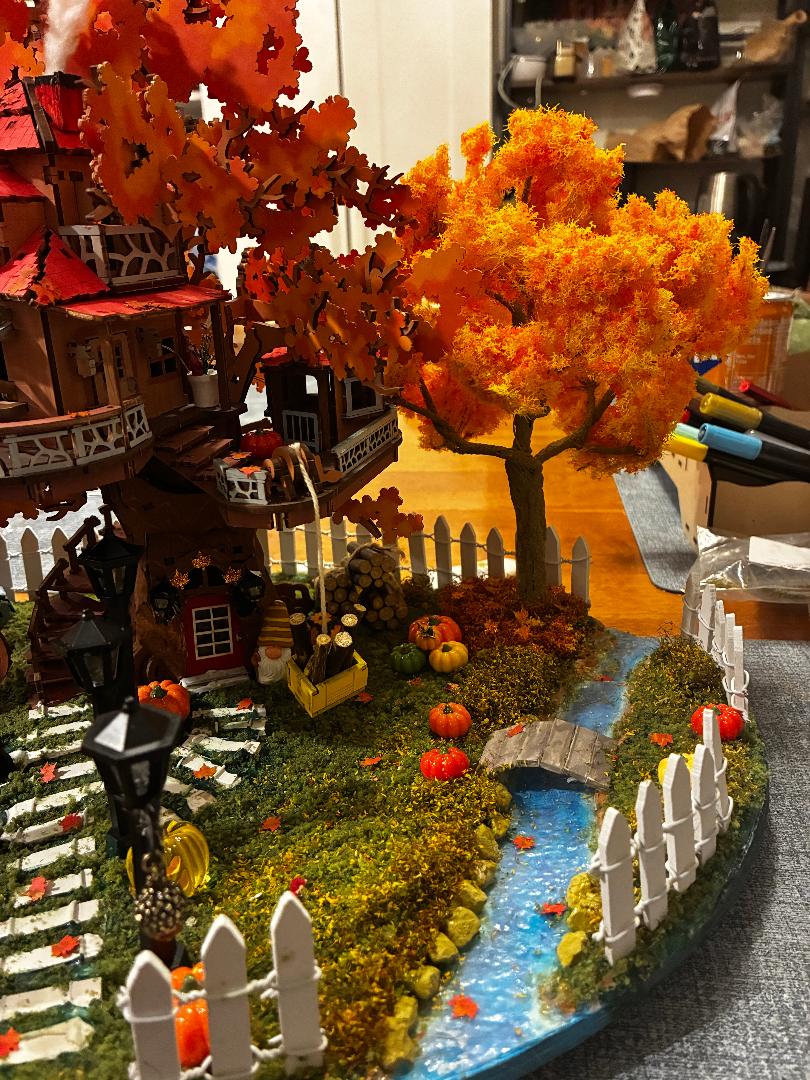
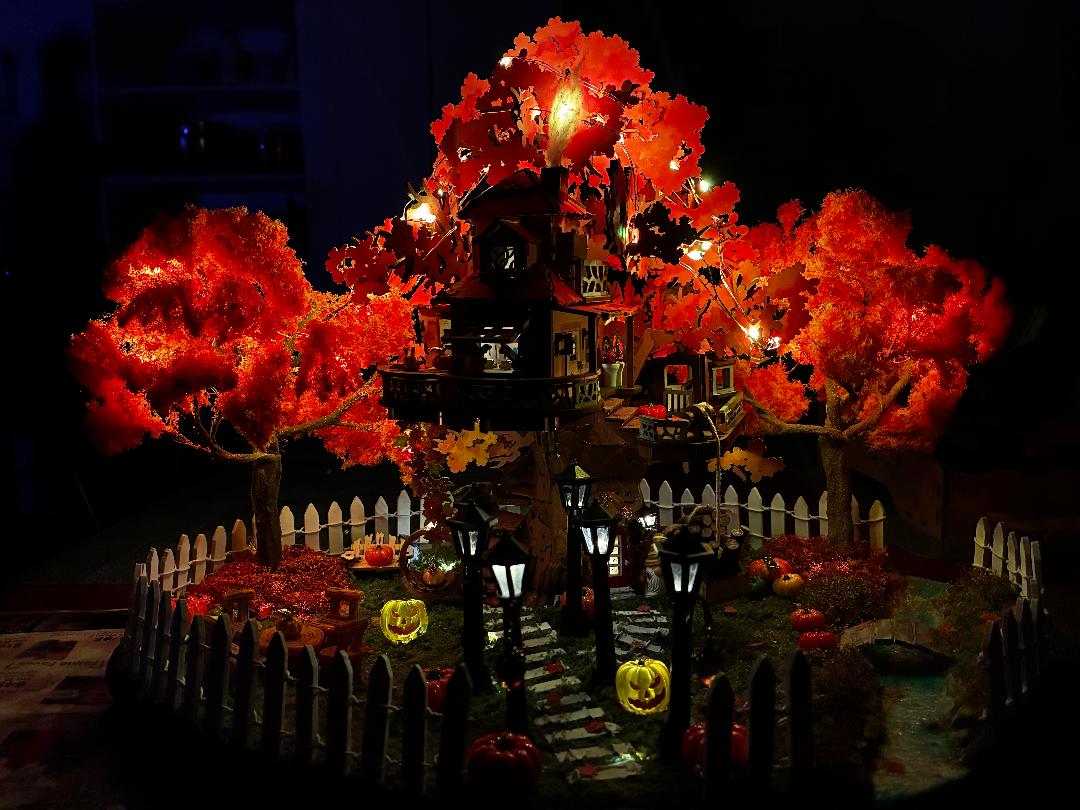
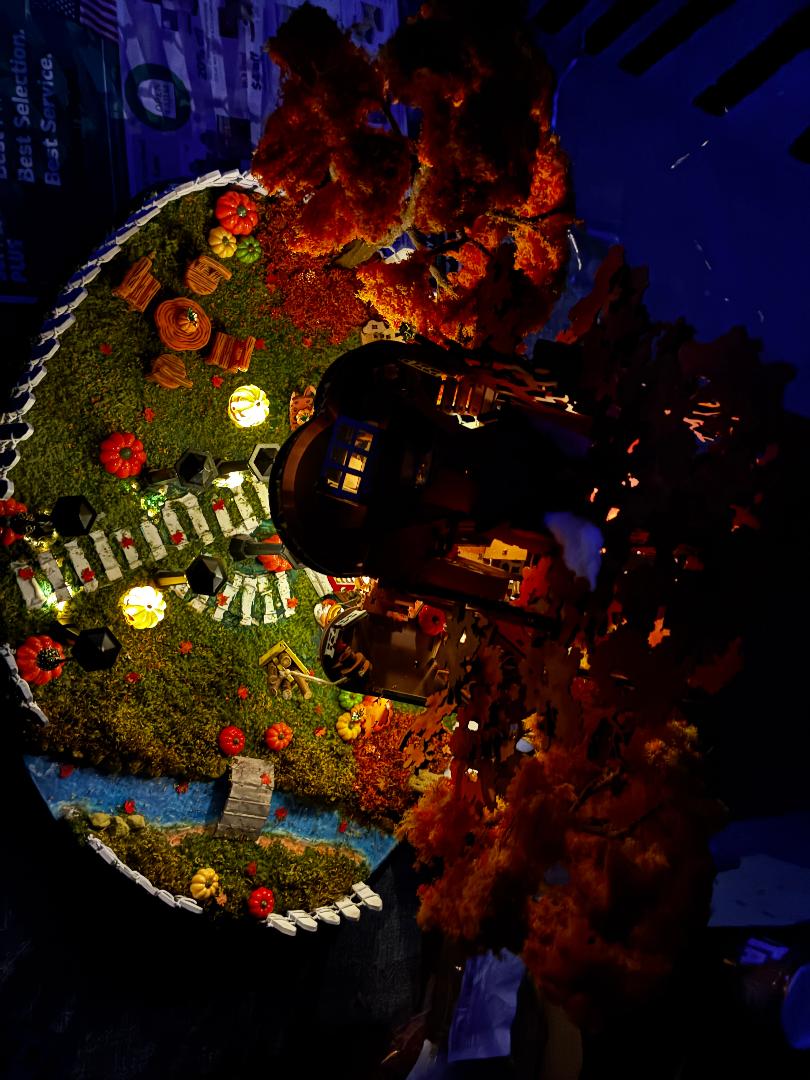
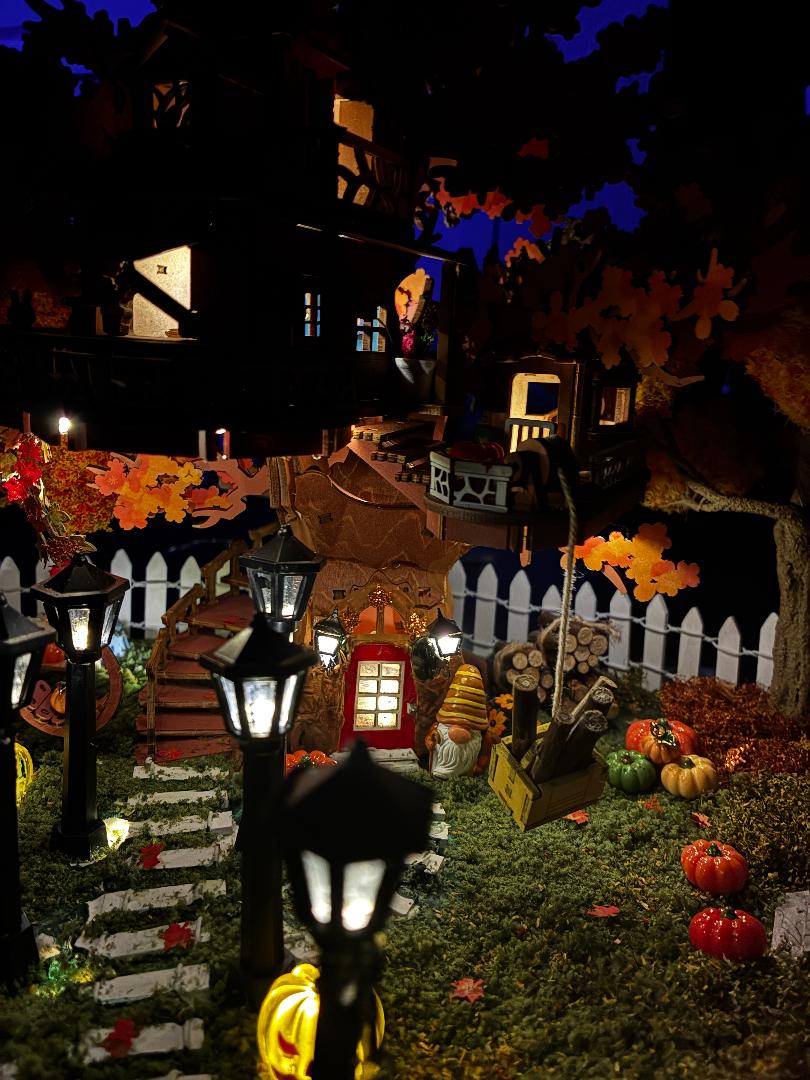
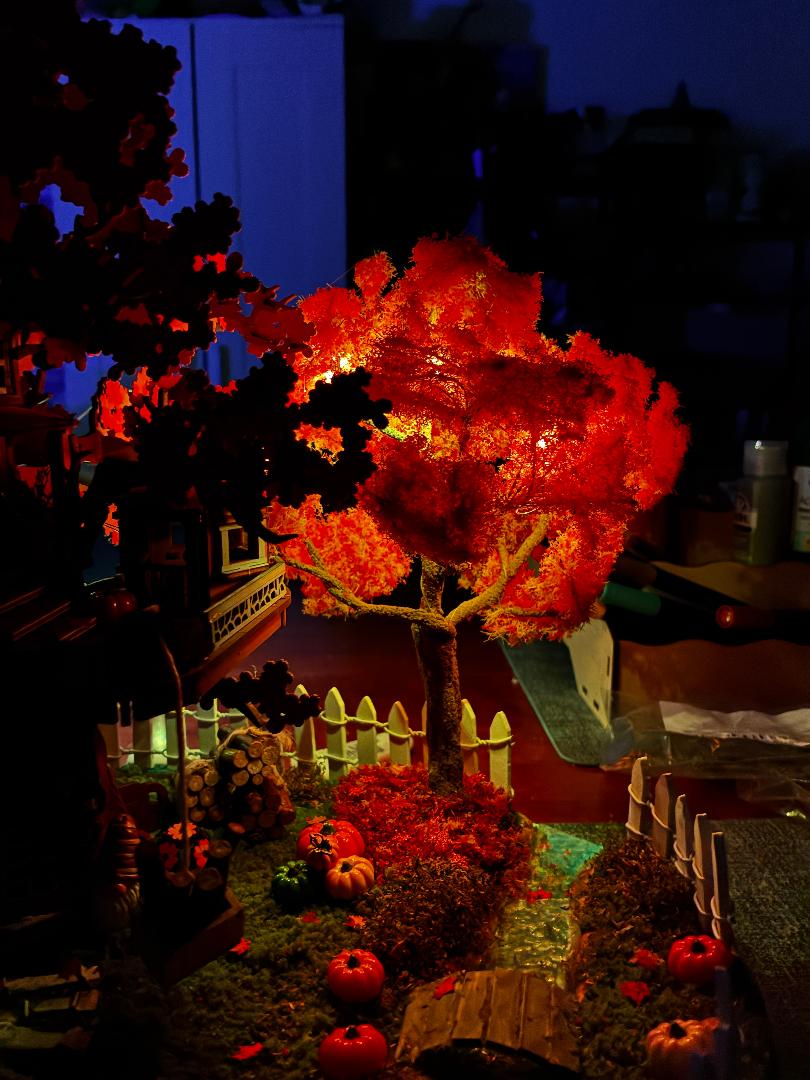
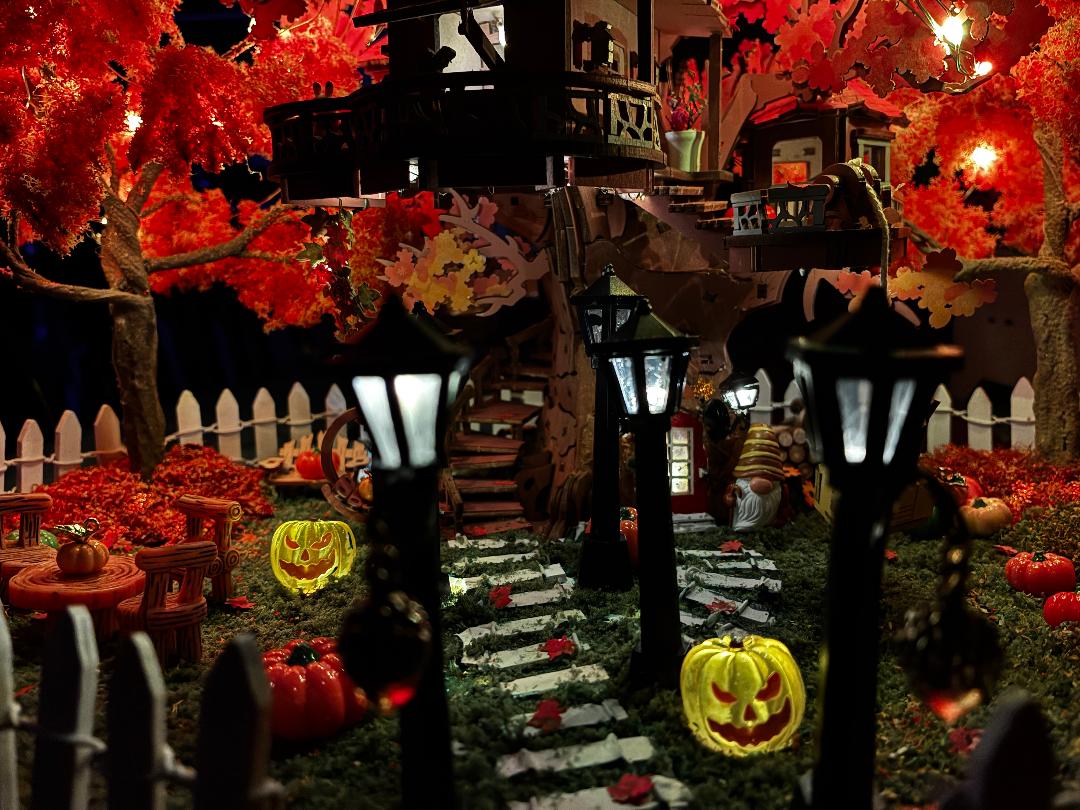
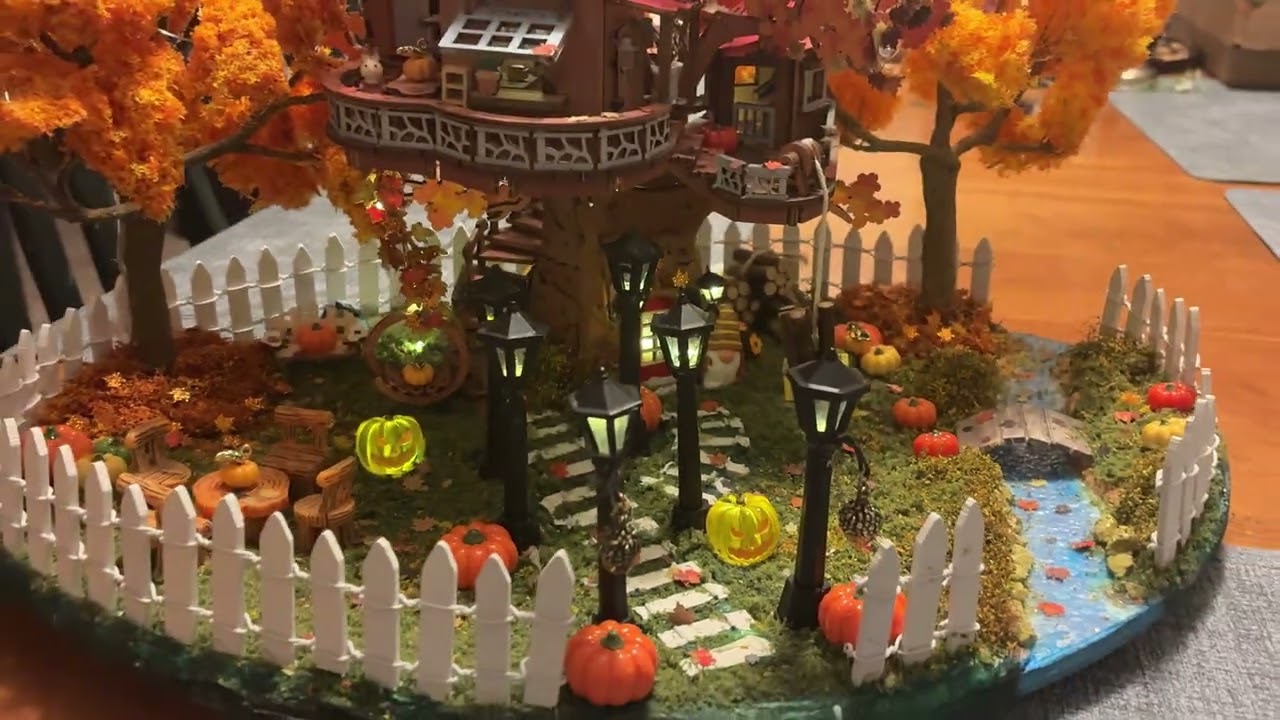
 the added lamps are great the trees well there stunning !the pumpkins and fire wood look great also !

 Good luck to you, hope you win!
 the colors the details look absolutely stunning